'Heaven is Nobody’s' by Hector Prats '23 Now Streaming on Short of the Week
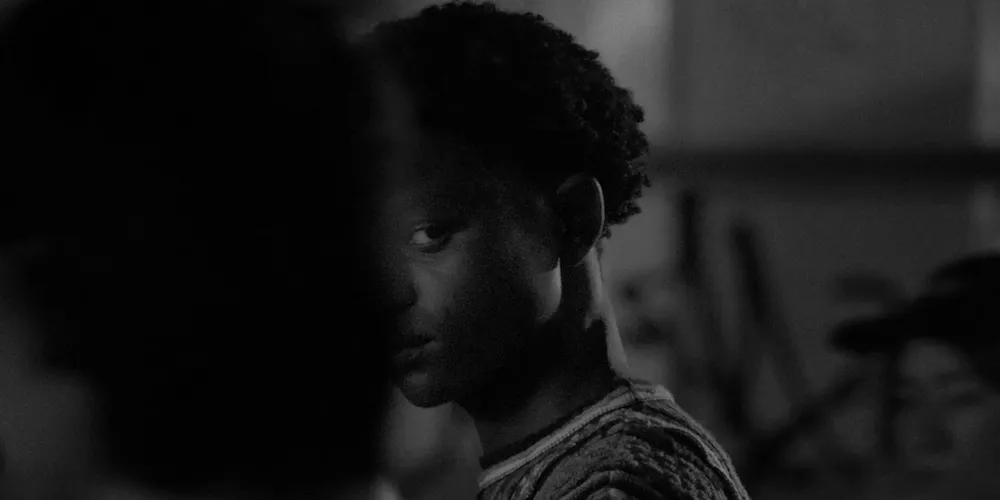
Contemporary dark fable of a short film, Heaven is Nobody’s—the latest by director, Film alum, and Adjunct Assistant Professor in Film and Media Studies Hector Prats '23—has been released on Short of the Week, a premier, curated online platform that showcases work by top emerging filmmakers from around the world.
Prats first gained recognition with his Columbia first-year film, Enloquecer, which made a strong impression on the festival circuit. The film premiered at the 2022 Nitehawk Shorts Festival and went on to screen at Palm Springs ShortFest, Tacoma Film Festival, and Bushwick Film Festival, among others. It later debuted online on Short of the Week and snagged a coveted spot at Vimeo Staff Pick, a platform that curates a selection of the best short films on the internet.
Heaven is Nobody’s unfolds in a nightmarish city haunted by sound and follows Narciso, a young man in search of a cure for his mother while being chased by an unseen rhythmic force—a sonic entity that possesses bodies and bends reality.
Loosely inspired by the historical Dancing Plague of 1518, Prats traces the origins of the film to the eerie power of belief. "For Heaven is Nobody's, I took inspiration from the strange real events that happened in Strasbourg in 1518, when a mass hysteria episode, manifesting as a dancing plague, took over the city for more than a month, putting up to 400 citizens in a state of trance. Learning about this event, I was immediately gripped by it. The spiritual predisposition of a whole city is what could have led them to be cursed. It was the discovery that belief can create fate which drove me to develop this fable. I wanted to peek into the darkness of a madness that ultimately comes from within ourselves, but that feels out of our control. Unlike the citizens of Strasbourg, I voluntarily chose to tempt fate, asking myself if I'd fall for something so appealing, yet so frightening."
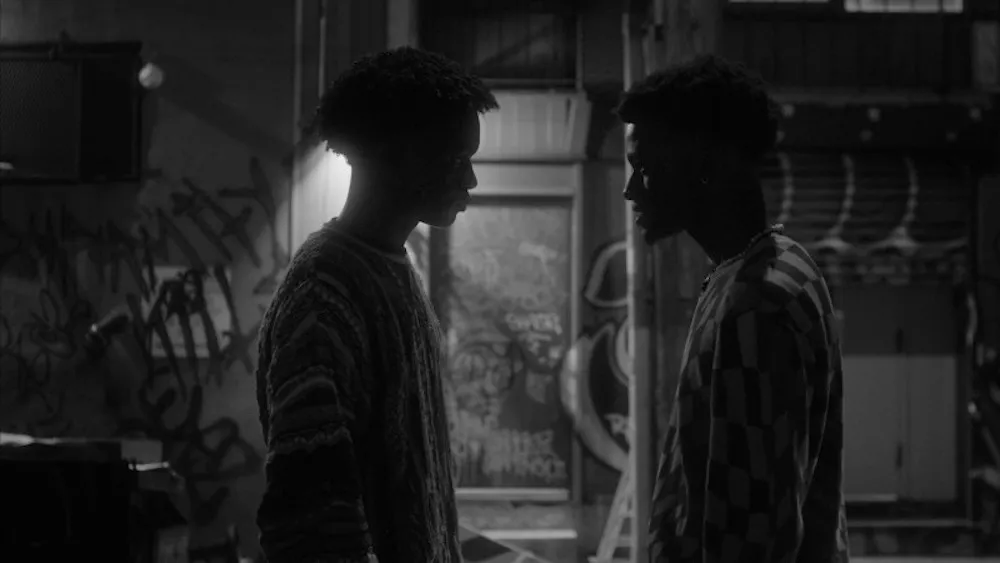
If the film explores the logic of curses, its production seemed to embody it, what with the series of less-than-fortunate events which threatened to derail the project at multiple stages. As Prats recounts, "In our producer Heather's words: ‘By all accounts this film shouldn't exist.’ It is fitting, even poetic, that a film about a curse would wind up feeling cursed itself. It sounds crazy, but the feeling was real. Not once but twice we couldn't get our cinematographers into the country. When we pivoted and locked a local DP, he got hit by a car a few weeks before production. (He's doing fine now!) We pushed our dates twice, and making that decision both times was hell, albeit necessary in hindsight to keep the train on the tracks. Keeping a team together when you're trading in favors can feel impossible, but it's an essential part of no-budget filmmaking, and our commitment to the vision and the people behind it helped us field every curveball and get through every tough decision that followed."
Despite these challenges, Heaven is Nobody’s went on to enjoy an extensive and successful international festival run, screening at SIFF, Palm Springs ShortFest, New Orleans Film Festival, Atlanta Film Festival, HollyShorts, and Bogoshorts. Across these platforms, the film has drawn attention for its radical integration of sound and image.
For Prats, sound is not an accessory but a generative source. "I usually start with sound. A noise, a rhythm, a sonic hallucination I can’t shake. Unlike images, sound is sneaky; it slips in whether you want it to or not and quietly reshapes reality," he told Film Shortage. The film’s original soundtrack is now available on Spotify.
The short serves as a proof of concept for Prats’s upcoming feature, A Time to Dance, which seeks to expand this sonic universe. Reflecting on the transition from short to feature, he describes an ongoing inquiry into the porous boundary between the psychological and physical, and the limits of the mind and body. “"n A Time to Dance, I want to expand the world the short inhabits—one that only exists in our nightmares, with no way in or out. I’m drawn to questions like: how much can our body and mind hold before they revolt against us? To what extent can we be physically affected by sound? Can we resonate at the same frequency as others, as a whole? And, straight from Strasbourg: can a personal problem become a societal one? I’m chasing this idea of a curse as a sentient aural presence, and testing whether it can take us to both places of horror and relief."
Watch the short here.