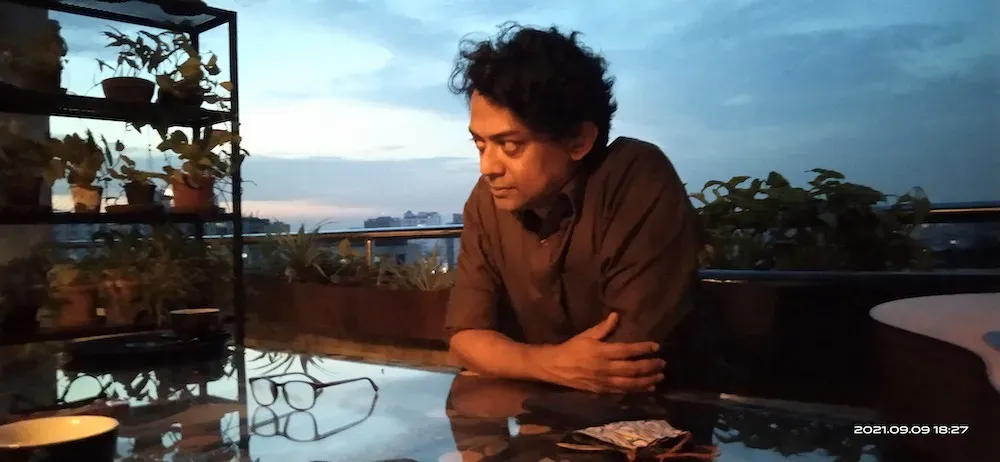
Naeem Mohaiemen
Naeem Mohaiemen combines film installations, photographic collages, and drawing-based prints to research the forever yearning for left utopias against silos of race and religion, and the family unit as container for the many modernist projects of the last century. Starting from South Asia after the ruptures of 1947 (partition of British India) and 1971 (separation of Bangladesh from Pakistan), his projects ripple out to an airport as staging ground for Maoist mutinies, a graduate student searching for the revolutionary spirit in Bangladesh, missed encounters of two generations of the European left, and labor migrants who became conscripts to Arab liberation. He is equally critical of fatal errors among the revolutionary left, as well as the excesses of gangsster capitalism. Projects have taken on the crisis of decolonial movements that replicate old oppressions in new forms, the obscuring of class as a mode of thinking through the idea of utopia, and the suffocating position of the English language within the triumphalism of global capital. Conversations around “nonalignment” as a concept in contemporary art transformed after the premiere of his film Two Meetings and a Funeral (2017) at Documenta 14, which was a finalist for Britain’s Turner Prize (2018).
Art Review magazine’s annual list of 100 practitioners impacting contemporary art included him in the 2023 rankings, describing the work as “a blueprint to imagining a new structure beyond the established neoliberal norm.” Historian Vijay Prashad calls him “an archaeologist in search of a future,” [Afterall, 2019] and art critic Murtaza Vali points to Dustin Hoffman in Marathon Man (1976) as “a hapless history student studying for a Ph.D., an erstwhile stand-in for Mohaiemen” [Modern Painters, 2012]. Stefan Tarnowski writes, “The man indefinitely stranded in an abandoned modernist airport in Mohaiemen’s Tripoli Cancelled (2017), can be read as a comment on the present predicament of the leftist militant intellectual, in line with his earlier film set in an airport, United Red Army (2011)” [Art Asia Pacific, 2019]. Writing in the aftermath of the Arab Spring, Kaelen Wilson-Goldie said his work demonstrates “how to make engagements with a revolutionary past meaningful in the sudden eruption of a revolutionary present” [Bidoun, 2011].
Mohaiemen is co-editor with Eszter Szakacs of Solidarity Must Be Defended (2023) and with Lorenzo Fusi of System Error: War is a Force That Gives Us Meaning (2007), and author of Bengal Photography’s Reality Quest [in Bengali] (2025), Midnight’s Third Child (2023), Baksho Rohoshyo (2023), and Prisoners of Shothik Itihash (2014). Power Plant in Toronto has published a monograph on his work– What We Found After You Left (2020).
Mohaiemen is Chair of the Visual Arts Department, School of the Arts, Columbia University. He serves on the Governing Board of the Society of Fellows and Heyman Center for the Humanities, and is an Affiliated Faculty with the South Asia Institute and the Institute for Comparative Literature & Society. He received a BA from Oberlin College and a PhD (Anthropology) from Columbia University.
Media Mentions
Jones, Jonathan. "Naeem Mohaiemen: Through a Mirror, Darkly review–America on the brink as Tricky Dicky rides again," The Guardian, 09/18/2025.
Power 100: The annual ranking of the most influential people in art, ArtReview.
Basciano, Oliver. "Naeem Mohaiemen’s Left-Wing Melancholy," Cover Feature, Art Review Magazine (cover & interior images by Benjamin Salesse, Columbia SOA '24), 09/2025.
Conversation with Adam Szymczyk, BOMB Magazine, Spring 2026.
Adhikari, Arnav. "'The After of the Already Too Late': Cinema, Time, and Third World Solidarity in Naeem Mohaiemen's The Young Man Was." Cultural Critique, vol. 127, 2025, p. 177-205.
Chaudhuri, Supriya. "The Archive as Detritus: Naeem Mohaiemen’s Jole Dobe Na." BioScope: South Asian Screen Studies (09749276231169866.), 2023.
Banai, Noit. "To Whom Have We Been Talking? Naeem Mohaiemen’s Fabulation of a People-to-Come." Global Storytelling: Journal of Digital and Moving Images 2.2, 2023.
Prashad, Vijay. "Naeem Mohaiemen’s Tragic History of the 1970s Left," Afterall Journal 47, 2019.
Tialiou, Kelley. "Inhabiting Liminality: Cosmopolitan World-Making in Naeem Mohaiemen’s Tripoli Cancelled". Humanities 2019, 8(2), 117.
Plys, Kristin. "Nostalgia for Futures Past: The 1970s Global Left in Naeem Mohaiemen’s Afsan’s Long Day (The Young Man Was, Part II)." Third Text 36, no. 1, 2022: 41-55.
Selected Works
Naeem Mohaiemen, Tripoli Cancelled, Documenta 14, 2017.
Naeem Mohaiemen, MTA: Dawn To Dusk, Dia Art Foundation (lecture performance) & Serpentine Pavillion (companion book), 2022.
Naeem Mohaiemen, Das Stasi Panoptikon, Hamburg Photography Triennial, 2026.
Naeem Mohaiemen, A Missing Can of Film, Kochi-Muziris Biennale, 2025.
Naeem Mohaiemen, Through A Mirror, Darkly, Artangel - London, 2025.
News
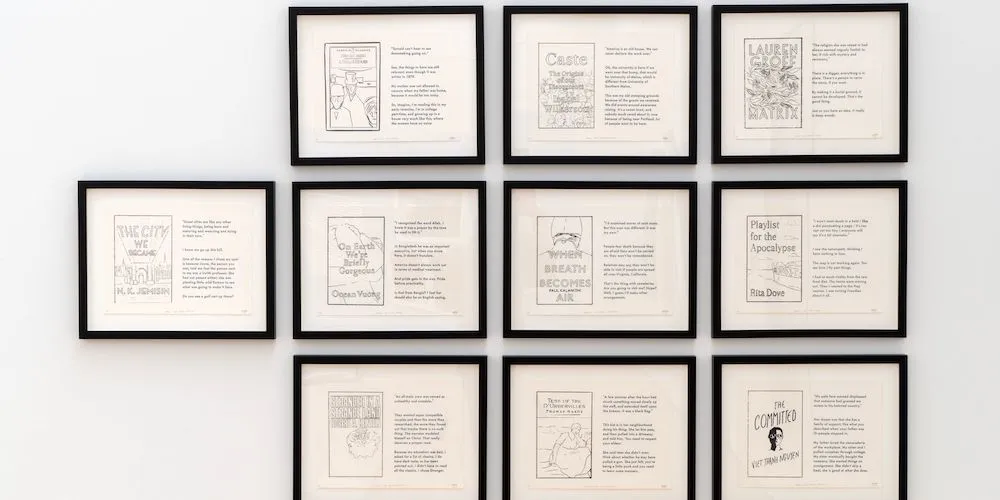
During the Covid-19 pandemic, Associate Professor of Visual Arts Naeem Mohaiemen (GSAS '19) created two works, both of which are featured in The Light at the End of the Tunnel, a solo show on view at Kenyon College’s teaching museum, The Gund.
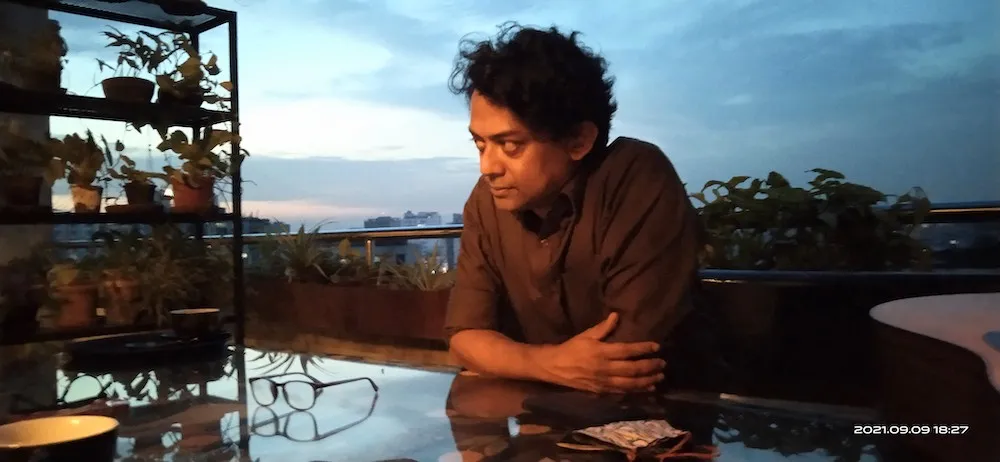
Here, we talk with Associate Professor of Visual Arts and Photography Concentration Head Naeem Mohaiemen about the future of photography, the path of unlearning, and his journey to becoming an Anthropologist in the Visual Arts.
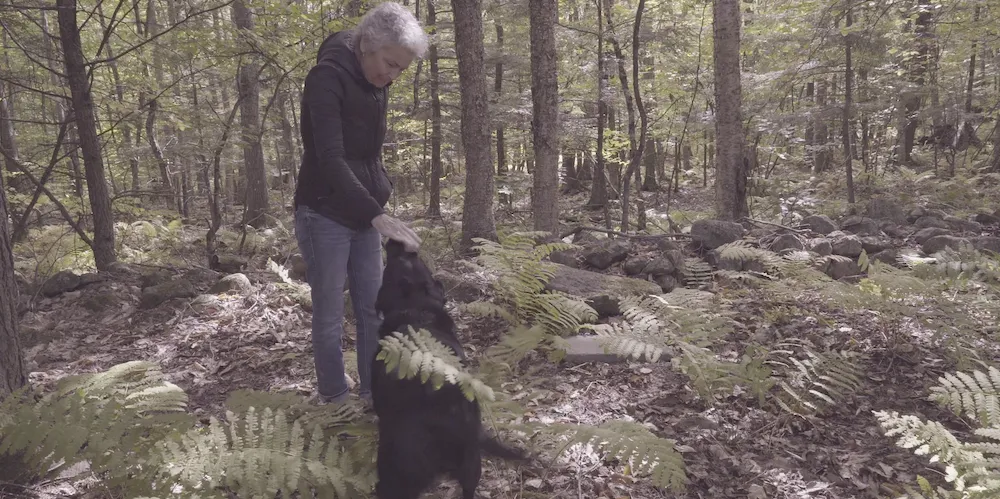
Until April 23, 2023, the Davis Gallery of Colby College’s Museum of Art is presenting Associate Professor of Visual Arts Naeem Mohaiemen’s interdisciplinary show, Grace, which consists of a collaborative curation and screenings of two films: Grace (2022) and Jole Dobe Na (2020).
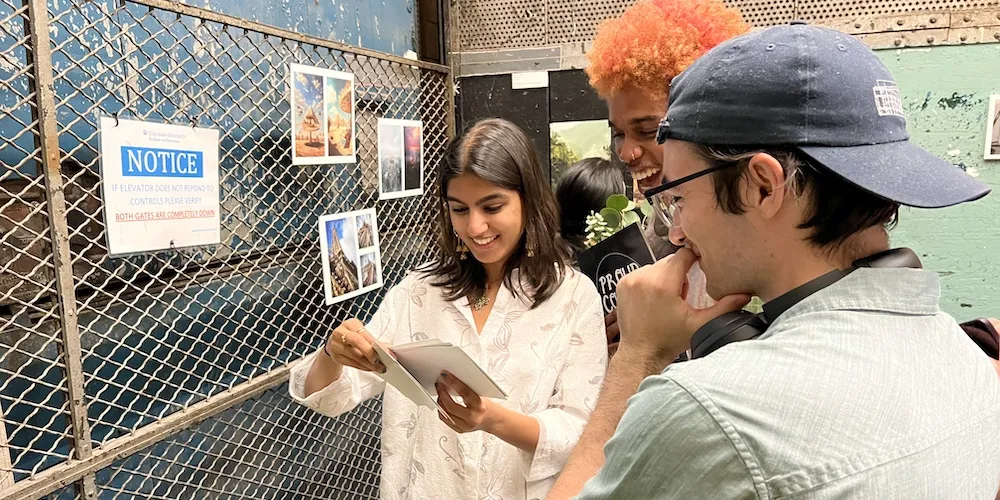
In the ever-expanding discourse around art and AI, Associate Professor of Visual Arts Naeem Mohaiemen foregrounds curiosity.
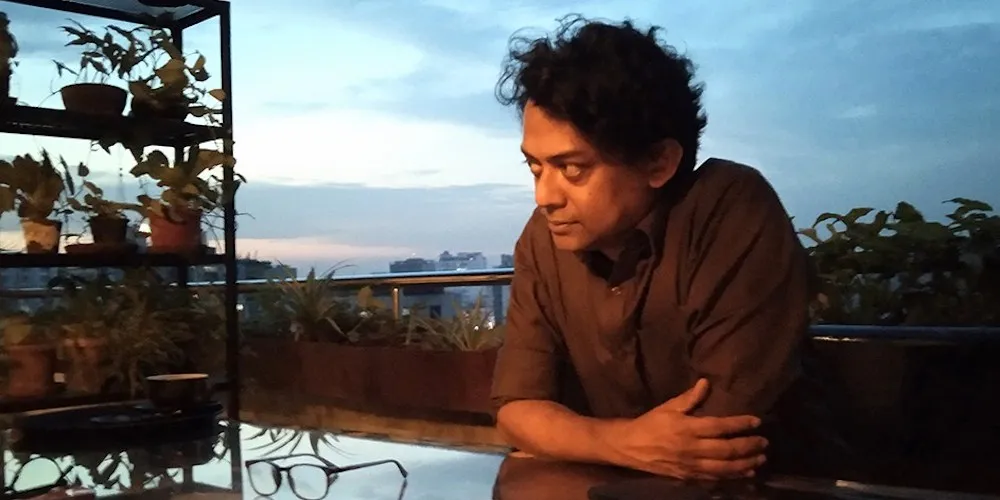
Professor Naeem Mohaiemen combines video, film, photography, drawing, writing, and research to answer questions.