Who Decides What Stories Are Told? Undergraduate Film Alum Gabriel Mayers (CC '17) on Producing Provocative Films
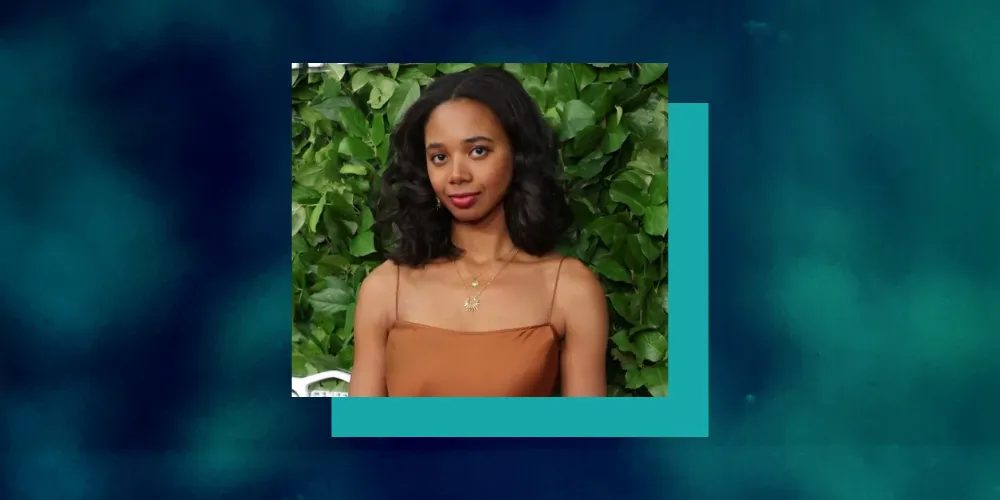
Calling in from Paris, producer and Undergraduate Film alum Gabriel Mayers (CC '17) pauses briefly to grab a blanket from the couch before settling in for the interview. “I dont really know what time it is,” she confesses with a small laugh.
Mayers is currently on the set of Fleur, an erotic thriller set in Paris and starring Halle Berry. Written and directed by MFA Film alum Ellie Foumbi '17, the film is the first feature being produced under Mayers’s company Plot Twist Pictures and has spent nearly three years in development. Now finally in production, Fleur marks a major milestone for Mayers, whose path into producing began not with a desire to direct or write herself, but with a fascination for how films get financed, championed, and brought into existence at all.

“I don't think I knew what producing was until I made my first movie,” Mayers reflects.
Still there were a few things she knew early on. The first was that she loved the act of putting things together. She wasn’t necessarily interested in directing, lighting, or gripping herself, but rather in shaping the larger creative vision around a project.
“I knew I wanted to organize what that looked like,” Mayers reflects.
The second was a realization that came through a class which Mayers took in her sophomore year at Columbia called The History of International Cinema taught by film critic Richard Peña. There, Mayers encountered films that existed outside the traditional canon of Western films.
“We were watching films like Rodrigo D (1991, Victor Gaviria)—an Argentine film. There were all of these Colombian and Cuban films like Memories of Underdevelopment (1973, Tomas Gutierrez Alea),” Mayers recounts with a glint in her eye. “And I think I was also very excited because it was the only part of the film canon where you could see non-white films. You didn't just get Casablanca or the French New Wave, you got Indian cinema, things from Taiwan, things from Chile in the sixties—it was really cool!”
But what fascinated Mayers most was not only the films themselves, but the systems that made them possible. The class traced how government schemes and tourism initiatives had set up artist funds that made it possible for generations of filmmakers to create work outside the dominant commercial framework.
“And I thought to myself, what else do I not know about this?” Mayers recounts. “For whatever reason, I was drawn to all the laws that were put together that helped create film funds for things,” she says, “and obsessed with trying to find out how people got money for things and greenlit them.”
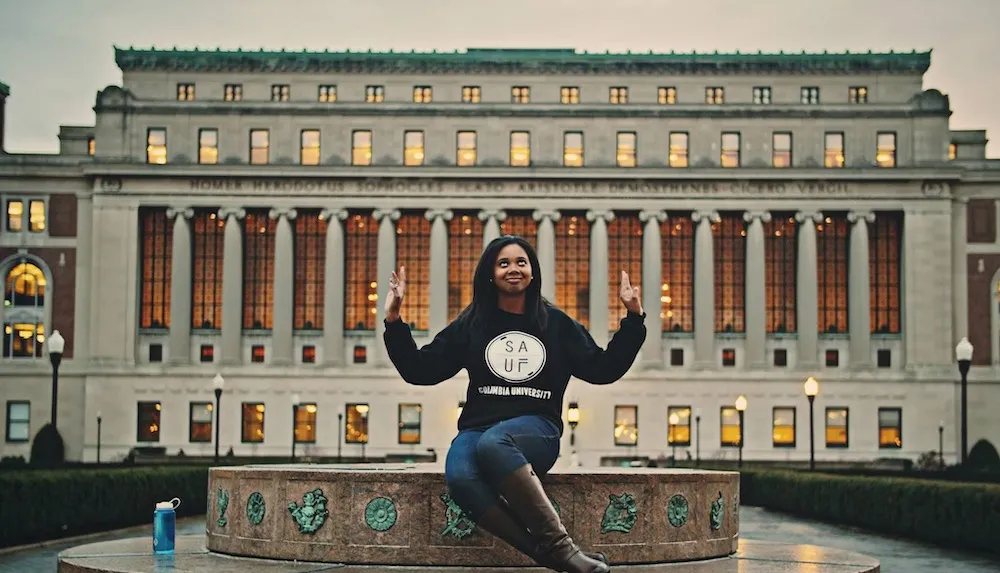
Mayers was in college during what she describes as the “diversity boom” in television—when shows like Insecure, Fresh Off the Boat, and Empire were reshaping conversations around the kinds of stories audiences were seeing onscreen. Through work-study internships across television networks and audience-building companies, she immersed herself in understanding how audiences responded to stories. She worked on Sprout—a children’s TV channel—worked at Bad Girls Club, Comedy Central, MTV, and Fox’s television division; but one question continued to follow her—why did some projects get made while others didn't?
“Clearly someone is financing this,” Mayers remembers thinking. “I should learn how you finance provocative things, especially if that’s what I wanted to make.”
That question eventually shaped Mayers’s senior thesis at Columbia, titled They Say They Can’t Sell Black Television, which examined the global distribution of Black television from the 1960s through 2016. In researching the project, Mayers became fascinated by the ways diverse narratives traveled internationally despite industry assumptions that they would not resonate abroad. The thesis explored the different international markets that allowed diverse projects—not only Black television, but a wide range of underrepresented stories—to be created in America and exported overseas, and how those narratives impacted both political relations and cultural perceptions across borders.
“At the time, people kept saying that diverse narratives don't travel internationally, and I thought, well that doesn't make any sense. Because that's why I was drawn to that class that Richard Peña taught—I could see that there is international diversity in all these stories. And if I could figure out the structure and finance plan to help push it ahead, people wouldn't say that I [had to] take no for an answer.”
Her research uncovered surprising cultural patterns: the popularity of The Fresh Prince of Bel-Air in China, the global reach of Roots, and the ways marketing schemes work to excel narratives and often determine whether a show could succeed internationally.
“For example, Empire is essentially King Lear. And each culture has their own version of a story about men who attack their children and children who try to learn how to grow up and fight back. That's also what the Lion King is about. So it was more about taking a story and translating it to another place’s language and culture,” she says.
Mayers pauses for a moment before summarizing the thread connecting all of it—“I think I was on a mission to figure out what it was to create and finance provocative, diverse content,” she says. “That’s always what my mission has been.”
But since Mayers entered the industry without a mentor or producing partner to guide her, she learned through immersion. “Mentorship is not always as readily available to People of Color, as it is for others in this industry,” Mayers says. “So when I wanted to understand something, I would surround myself in that environment and absorb as much as I possibly could.”
That instinct first led her to Vice Media, where she learned how to finance projects others could not. From there, she worked on a documentary before heading the Film department at Killer Films, the independent production company behind films such as Carol and Past Lives, by Theatre alum Celine Song '14.
At Killer Films, Mayers began developing projects alongside filmmakers from the ground up, building relationships that would eventually follow her beyond the company and into the birth of her own production house, Plot Twist Pictures. Often the only person in the room who looked like her, Mayers began to claim her place at the table.
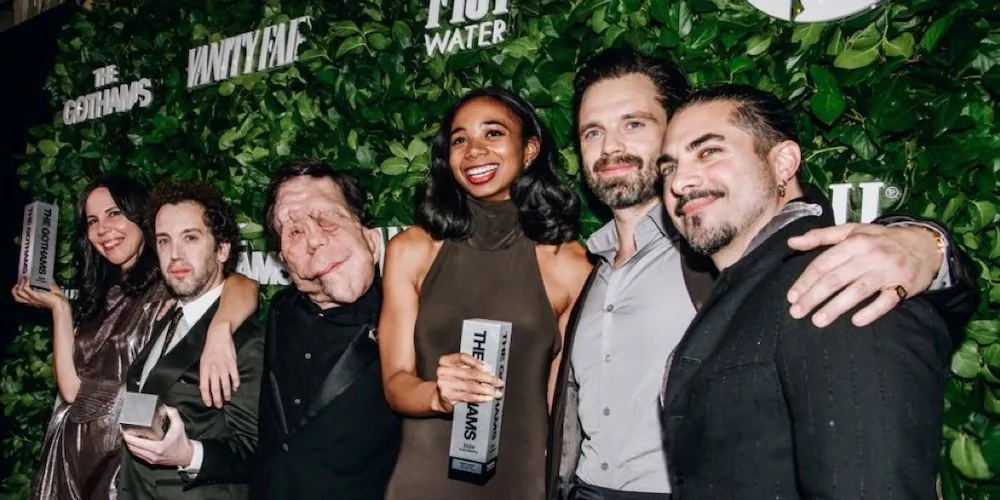
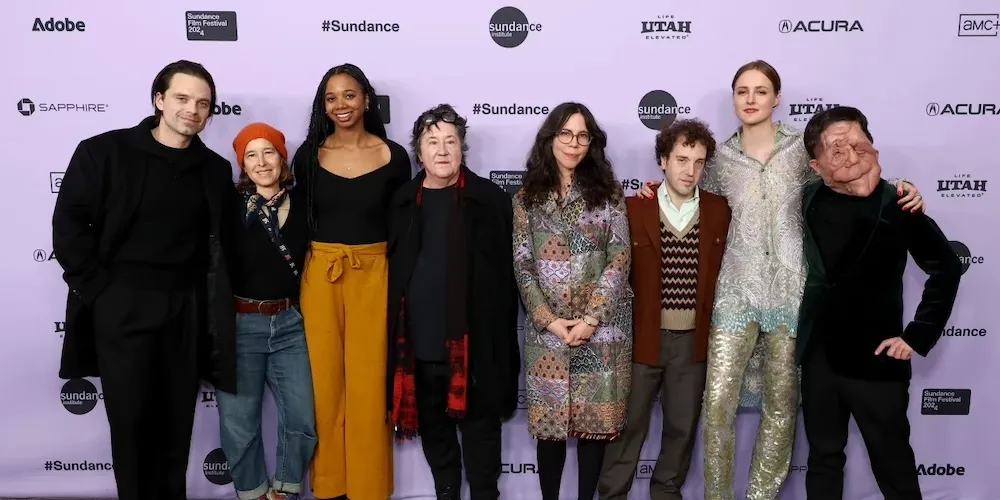
That confidence only grew after the success of her first film as a producer, A Different Man (2024, Aaron Schimberg). The project went on to win a Gotham Award for Best Picture in 2024 and nominations at the Independent Spirit Awards, while actor Sebastian Stan later earned a Golden Globe and won the Berlinale Silver Bear for his performance.
“We weren’t expecting any of it,” Mayers says with a laugh. “Everyone was like, I never expected you to win. I was like, wow thank you, I think?”
Her next film, Mad Bills to Pay (2025, Joel Vargas), screened at Sundance, Berlinale, New Directors/New Films, and the Karlovy Vary Film Festival.
Around that same time, Mayers met writer-director Ellie Foumbi. When I ask her if she and Foumbi ever crossed paths with each other on campus, or if she knew they graduated the same year in 2017, she is visibly surprised.
“What? I didn’t know that,” Mayers says. “That’s funny. Dodge is such a small place.”
The coincidence, however, made sense to her in retrospect.
“I always tend to find that the directors I’m drawn to somehow went to Columbia,” she says. “It has not been my intention but the focus on screenwriting and story there is so strong that it really shows in the work.”
When I ask what drew her to Foumbi, she laughs. “Well, we’re both Sagittarius-coded,” she jokes before pausing for a moment. “The thing is Ellie is pretty magical. And I know everyone says that about people, but, when Ellie looks at someone I can automatically tell they're going to be in a conversation for three hours. It's because she has this way where she can just bring anybody into the fold.”
Mayers and Foumbi initially connected over another project before Foumbi brought the early idea of Fleur to her.
“It was always about a woman who escapes,” she says, “and the husband has no idea what to do because he doesn’t know how to connect to her.”
What started as an idea became a treatment and then underwent several drafts of revision before navigating the difficult challenge of finding a ‘Fleur’—until the screenplay reached Columbia alum and Film executive and fellow producer Zach Vargas Sullivan (CC '14), who said, “do you know who would be perfect for this role? Halle.” Sullivan suggested submitting the script to producer Holly Jeter, who sent it to Halle Berry.
“I think we were probably all at Columbia at the same time but just didn't know it. It's funny because the person who connected us to Halle was another Columbia alum,” Mayers says.
After reading the script, Berry responded enthusiastically to the material. “Apparently she read it on the plane that morning,” Mayers says. “And then we met her and Jeter, and they were over the moon about it.”
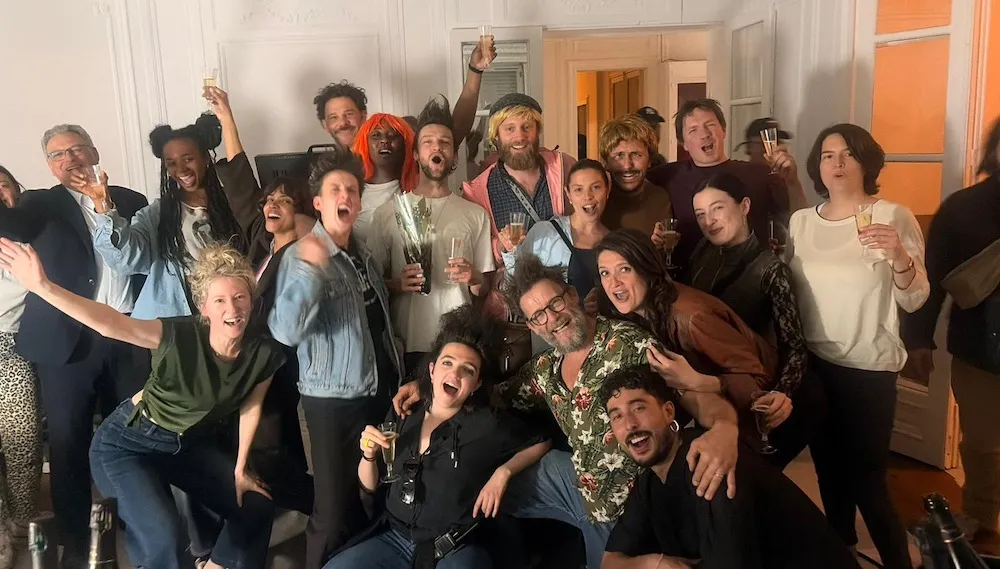
From that point on, Mayers and the team took the project out for financing again, and a year later, here they are, in the middle of production, shooting the project in Paris. “Everyone on set really likes each other. Jomo Fray is our cinematographer and when he and Ellie talk, I kid you not, they're so intellectual and smart, It's kind of like watching Toni Morrison write. It's very artistic, elusive, but also has such strong meaning and significance. I've never seen anything like it. And we’ve had crew members who are world-renowned at what they do sign up to be a part of the film because they are excited by the story. It's been really fun so far.”
Though the films Mayers champions span wildly different genres—erotic thrillers to coming of age dramas—Mayers describes a common thread of a philosophy that runs across all of them. She is ultimately drawn to stories that stay with people long after they leave the theater.
“They are really about certain points in people’s lives that they want to return back to,” she says.
“Fleur is about a certain time in a woman’s life, and a very fantastical [version] of what could occur that makes her rethink her position. Mad Bills is a coming of age story about a man who gets his girlfriend pregnant—a very common experience. A Different Man is about someone who has changed his circumstance and doesn't feel accepted—something that happens every day. They are all just points in people’s lives that people would like to return to when they need guidance and help. I want to make movies that will be worth someone’s 30 bucks.”
Mayers currently has two projects in development in the UK, one in Japan, one in France, and one in America. She is also adapting Cheryl Dunye’s The Watermelon Woman into a stage musical this summer. What she aims to do each time is to take a local story and help it become a commercial success that can cross oceans. “If you make it specific enough, it doesn't matter who you put into it. I do believe local stories can be global.”
It is also this ethos that guides her company Plot Twist Pictures—a name Mayers says comes from her fascination with disrupting assumptions. “My name is Gabriel, but it is spelled like a boy’s name. People don't know I am a woman when they meet me. I think people have assumptions about what something can be when they first look at it. With all the productions I put forward, I want everyone to leave not expecting what they just saw and experienced. I want people to feel like they had an unexpected thing happen to them that made them reconsider their assumptions and preconceived notions. That's the ethos of what I'm doing, hence the name Plot Twist.”
Back on the set of Fleur in Paris, that belief no longer feels theoretical. It is already happening.