They Met Here: Screenwriting Duo Rory Haines '11 and Sohrab Noshirvani '12
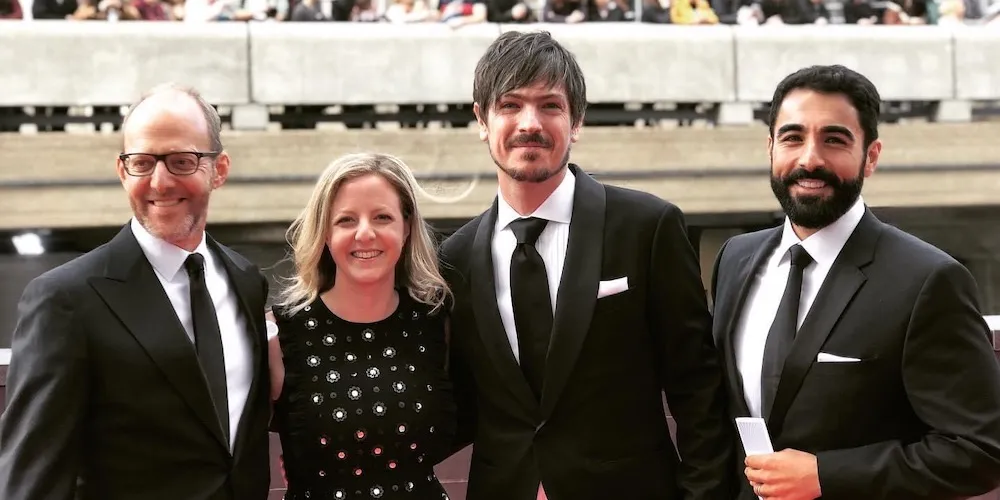
Rory Haines '11 and Sohrab Noshirvani '12 met in their first screenwriting class at the School of the Arts over ten years ago and quickly developed a creative partnership. Since then, they've collaborated on dozens of projects; in fact, they only work together. Shortly after graduation, their original feature script, From Here to Albion, made it onto The Blacklist and was purchased by Participant Media in 2013. Just a few short years later, they sold another feature script, The State, to 20th Century Fox. Their critically acclaimed mini-series, Informer, was produced by Sam Mendes for BBC and Amazon in 2018, picking up a BAFTA nomination for Best Drama. In 2021, their debut feature, The Mauritanian, starring Jodie Foster, Benedict Cumberbatch, and Tahar Rahim, received nominations for 2 Golden Globes and 5 BAFTAs, including best adapted screenplay. In 2022, they co-wrote the DC blockbuster, Black Adam, which starred Dwayne Johnson, and grossed almost $400m at the global box office—and they are back at it again with a Rambo prequel that is rumored to begin shooting in Thailand in 2026. You get the idea–their partnership is working!
—
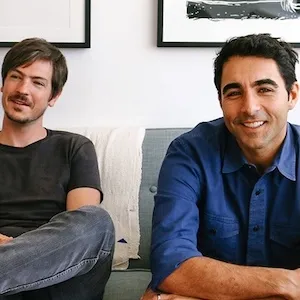
"What's that old joke about circumstances?" Haines asks Noshirvani soon after we sit down. We're discussing careers, luck, and timing; but when Noshirvani tries to answer and peters off at the punchline, Haines shoots him a look. "You told it awfully," he deadpans, and both erupt into laughter.
The interaction is emblematic of the creative partnership between longtime screenwriting duo Rory Haines '11 and Sohrab Noshirvani '12—one that stretches back over a decade and is based as much on candor and friendship as shared creative interests.
"More than anything," Noshirvani says, "we check our egos at the door. The way that we talk to each other, sometimes people think that we're fighting—but no. We never take it personally. We also have a rule that we both have veto power. We can say we just don't like an idea, we don't need to give an explanation."
"We don't try to be polite just to be polite," Haines adds. "We're not rude either—we just say I don't think that's going to work; and then the emphasis is on the other person to convince the other to see it their way. Maybe in the end you arrive somewhere with that."
"A lot of people do the 'yes, and…' thing," Noshirvani says, referring to a well-known technique in improvisational comedy and other creative collaborations, where a collaborator should respond 'yes' to whatever their fellow collaborator has suggested, expand on that idea, and keep the idea flowing smoothly.
"Which we don't do," Haines is quick to say, laughing. "We say 'no, but hold on.'"
Unlike many writing partnerships, Haines and Noshirvani have developed a process that involves actually sitting down to write together, rather than dividing a project or swapping scenes. Their process focuses heavily on research, conversation, and developing the story they want to tell before any words even make it to the page.
"Usually one of us will come in with one line or one thought," says Noshirvani, "or a lot of times it's a character or a relationship. It's not a big idea yet. It's characters we want to live with, or worlds we want to live in for long periods of time. We'll just sit with that for a long time. There's so many valid versions of movies or stories, and what we're trying to hone in on is the one that we're not only interested in, but we're the right people to tell."
"I think that's it," Haines agrees. "Any story could be cracked a million different ways. It's just about what is true to what you are trying to do with it. The initial conversation is honing in on that, and then it's all about, well, how do you get that to the page? I call it the island you're trying to swim to. Once you know that, then it's just about how you get there. The conversation takes a really, really long time; but the writing is quite short because by that point, we know what we're writing, what it means, and what we're trying to get across."
While the early stages of their writing process rely heavily on conversation and what the pair jokingly call 'bickering,' they are quick to admit how helpful it is that they can fall back on mutual values, interests, and a shared language they picked up during their time at the School of the Arts, where they met in their first screenwriting class with former professor Janet Roach, who was the first to recognize their potential as collaborators.
"There's so many valid versions of movies or stories, and what we're trying to hone in on is the one that we're not only interested in, but we're the right people to tell."
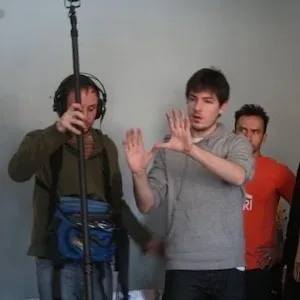
All jokes aside, they credit Roach for seeing that potential artistic chemistry in them—and for being right. "We started with shorts and it was a really great collaboration," Noshirvani says. "Then he [Haines] came on and was the first AD for the film that I directed; and from then on, whenever we had something, we just wanted to work together."
Both had international backgrounds—Noshirvani hailing from Iran, and Haines from the UK—and were raised in politically active families that instilled a sense of curiosity about the wider world, as well as a determination to take advantage of every resource the greater Columbia community has to offer.
"Columbia was such an amazing resource for us," Noshirvani says. "We had talks by [economist] Jeffrey Sachs–"
"Ban Ki-moon [South Korean politician and diplomat] came!" Haines interjects.
"We would find ourselves at these talks and events together," he continues. "Obviously we're super interested in film and passionate about that, but I think we also both wanted to bring or speak to a more global perspective of things outside of film, not just film for film's sake; and that bonded us quite tightly."
"It would be very hard to collaborate with someone that had completely different moral values." Noshirvani adds. "We also have the same tastes a lot of the time—"
"Although not today on the car ride," Haines says, grinning. "We have enough differences that it's not moot."
"Yeah," Noshirvani agrees, "you don't want to be hearing an echo of your case."
Having enjoyed their collaborations so much while in the MFA program, Haines and Noshirvani decided to continue working together after making the move out to California; but for a while, it wasn't easy.
"We both had jobs. Rory's wife at the time was going to her own grad school in North Valencia, and I was living in Hollywood at the time with my wife," Noshirvani says. "Basically at five every day after work, I would drive up there—it's the worst drive, horrible traffic—and we would work until two or three in the morning.
"We did that for a year at least," he continues. "Maybe a few years. At one point we thought, can we keep doing this? Can we keep writing together? And ultimately it came down to the thought—I prefer writing with him than writing by myself."
"It was also hard because we were figuring out where we wanted to swim," Haines adds. "At school you know what you're trying to do because you have these professors and you're swimming towards approval or whatever that is. Then you're out, and you look at this industry and you see what's getting made—and you don't have any professors anymore, so your advice is coming from your manager or your agent. You go through this process of thinking, should I make these movies that I think are going to sell? Then you write those, but they suck. We definitely did a few of those.
"Until you find the place where you and that industry overlap, it's really challenging. That thing about people finding their voice? I always thought that was a little cloying, a bit lame—but the truth is you actually do, because once you find that, that's the unique thing that you have that you're selling."
"I very distinctly remember," says Noshirvani, "the opening of a script—the first 10 pages—where we found our voice." says Noshirvani. "We said, oh, this feels right."
To Noshirvani and Haines, that moment came about thanks to practice and persistence, and allowing themselves to get back to the joy of the process, rather than focusing too much on the end result.
"I remember this feeling—you make something and it comes out and you're expecting something, you feel like you're going to cross a finish line," Noshirvani says, "but you're already onto that next project. So I think that I've learned not to take any sort of victory in the end product at this point. It's about the next thing we're working on. And I just really like our process. It's really fun. We get excited about the same scenes and the same character moments, and it just becomes…wordless. I don't have to explain where the scene's going because I know he knows where it should go or vice versa."
"I very distinctly remember the opening of a script—the first 10 pages—where we found our voice. We said, oh, this feels right."
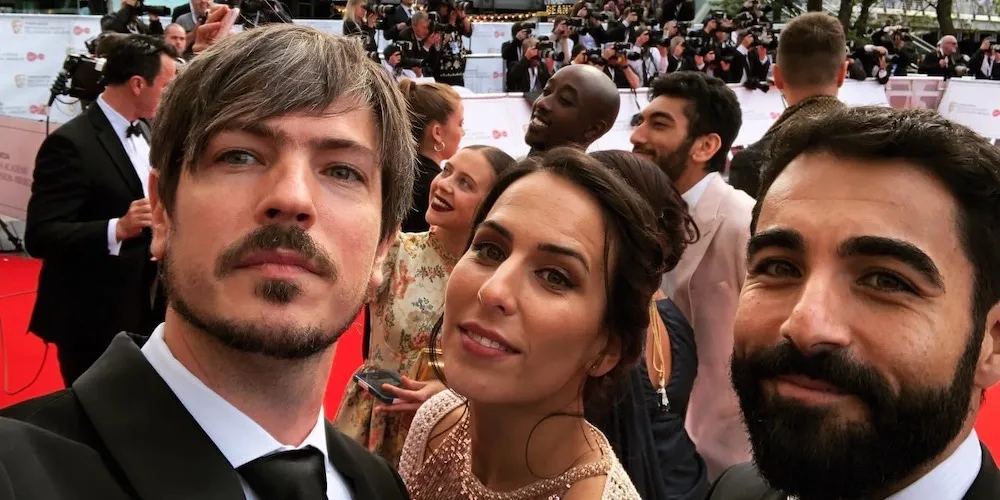
"Something I say to my wife often," adds Haines, laughing, "is I just don't like anybody else enough to do it. It just works. It's probably rarer than finding a spouse, because we spend more time together."
When asked about their favorite moments working together, both Haines and Noshirvani laugh.
"The days are long but the years are short," Noshirvani says. "We used to stay up all night, smoking cigarettes, drinking and filming and talking about movies. You get to do that when you're young. Now we have kids and our kids play together. Watching each other go through every phase of life, it's kind of incredible. You don't realize it when you're in it."
Their advice for aspiring filmmakers and current students—regardless of whether they're looking to find their lifelong collaborators or not—is simple:
"You have to value your time there," says Haines. "It's very, very precious. It's a really unique moment in your career, and you're surrounded by all these brilliant, brilliant people. Not just the professors, but also the other students. So you really just have to go for it. Don't hold back. Just go all in."
—