In Seth Bockley’s Adaptation Course, Theatre Students Write Towards an ‘Embodied Variant’
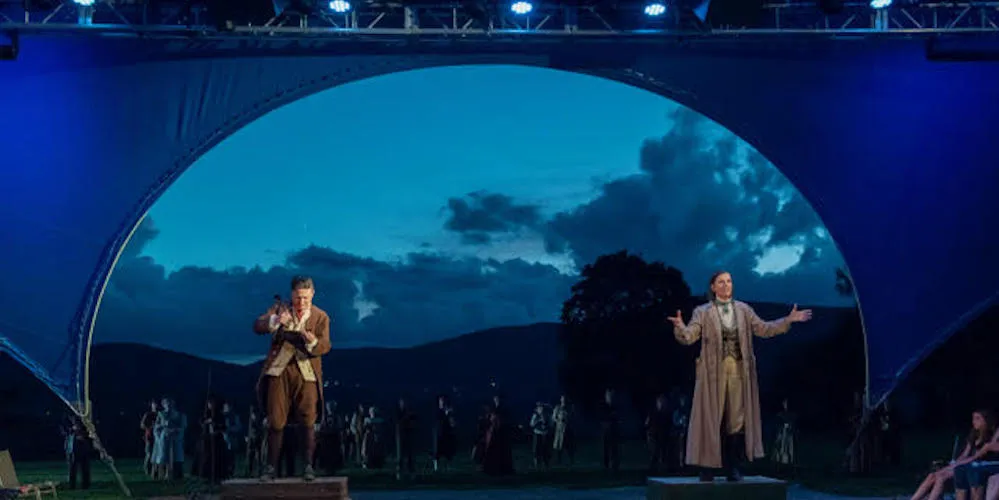
A course on adaptation may seem specialized, and yet the practice of adaptation has earned a place in mainstream cultural consumption. Think about the sheer excitement surrounding Christopher Nolan’s The Odyssey or how the biography American Prometheus: The Triumph and Tragedy of J. Robert Oppenheimer, the source material for Nolan’s 2023 blockbuster Oppenheimer, rose to number one on Amazon after the release of the film. Book to film adaptation has become a well-trodden practice in popular culture, but the art extends to and from many other mediums as well, including theatre. Notable text to stage adaptations include A Year of Magical Thinking by Joan Didion adapted with David Hare, which was performed as a one woman show by Vanessa Redgrave in 2007. Additional examples serve as types of adaptation where the text isn’t only adapted for stage, but additional elements, such as music or choreography, are introduced as a way of expanding the possibility of a production’s source material. Two examples of adaptations of this nature are the adaptation of Susanna Kaysen’s memoir Girl, Interrupted performed this summer at The Public Theater with a script by playwright Martyna Majok and songs by Aimee Mann, and George Saunders’s Lincoln In The Bardo, which is currently is at The Metropolitan Opera.
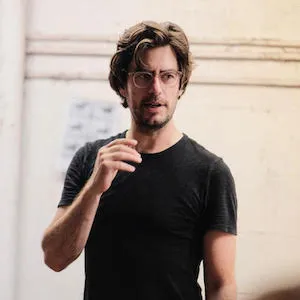
“Starting as an actor, as many of us do, we are familiar with this idea of serving an author’s vision,” Adjunct Assistant Professor of Theatre Seth Bockley tells me, “being an adapter is a flowering of that instinct.” Bockley, who has taught a course on Adaptation in the MFA Theatre Program since last fall, also works as an adaptor professionally. On the day we spoke over Zoom, Bockley was about to run off to rehearsal for a production of Faust he’s workshopping with the theatre company Adult Film. Bockley’s interest in the subject came instinctually. “I found that the narrative art forms that really inspire me are fiction, poetry, as much as they are theatre. Over and over I was drawn to fiction and prose when looking for stories I wanted to tell using theatre.” Bockley can’t quite define what it is about prose that drew him in, but he acknowledges his fascination and love of language. “The written word has a magic and fiction has a particular path into that magic which just captivates me.” Bockley has a desire and curiosity to see the power of these words never seen on the stage as “an embodied variant.”
The Theatre Adaptation course is required for MFA Dramaturgy students in the second year of their studies. Bockley sees the connection between the discipline and subject quite clearly. The art of adaptation requires a person to be able to delve into the conceptual nature of a work before attempting to translate it into another context. Dramaturgy as both a field and role on a production team requires a person to be able to analyze a completed work for its conceptual framework and composite parts.
“Adaptation, like dramaturgy, means that you're looking at every scrap of information about a text to understand how it works, to get under the hood, understand how the machine ticks and how it operates,” says Bockley. Dramaturgy is also often associated with research: the field can offer contextual insight into the intended effect of a theatrical work or a practitioner’s motivation for creating a narrative. The how and why of a writer’s project.
“Bockley’s adaptation course is a fruitful addition to my dramaturgy course load,” says Dramaturgy student Mari Tompkins. “The course is about using the mode of adaptation to create original work while investigating the question of why this piece?” Fellow Dramaturgy student Preston Kifer remarks that Bockley’s course has offered insight into a field he’d never considered when choosing to pursue the degree. “Bockley’s class, prioritizing both literary analysis and an exploration of your own work, has resulted in a rich set of tools to create art with,” he relayed to me.
The hardest part of a theatrical adaptation, Bockley notes, is designating a fixed setting for these works taking place in a fixed space. Film, using the camera as a stand-in for the audience’s vantage point, has the ability to create and display a whole world, but stage adaptations will more immediately be confined by the structure of live performance: the altering of time and space can only be altered so much. “We know what the story is, but where is the action unfolding? Setting is sometimes thought of as secondary, but for an adapter, I think it's primary.”
Bockley also feels that adaptation as a form can challenge the sometimes hierarchical nature of the theatre, acknowledging that adaptation’s reliance on source material outside of the theater has the potential to challenge creative structures within the theatre-making process. “I want to empower theatre-makers of the future to consider outside source material to play with and look at these texts and think well, what’s our version of this story? What do we want to do with it? That puts us all in the driver’s seat as makers."
Bockley’s course—which oscillates between seminar-based discussions of texts and in-class workshops attempting the art of adaptation in real time—begins with classic sources, looking at texts like The Iliad and Greek mythology, examining adaptations like Mary Zimmerman’s Metamorphoses as well as An Iliad by Denis O’Hare and Lisa Peterson. “It's good to see how vivid theatrical texts can be made from ancient poems and collections of fables and stories.” This leads into an examination of myths and mythologies outside of The Western Canon. The middle section of the course looks at fiction from the 19th to 21st centuries where works by Jane Austen, Virginia Woolf, or Kafka are experimented with as an in-class assignment. The third portion of the course looks at less traditional approaches towards adaptation, such as immersive and site-specific work, for instance the work by the theatre company responsible for Sleep No More, Punchdrunk. As a look into the professional world of adapting, Bockley invited the playwright Nambi Kelley into class to discuss her adaptation of Native Son which premiered at Court Theater in Chicago. The course culminates in an individual adaptation project, which consists of a script and outline of a project.
“Everyone is doing really different projects this year,” Bockley tells me. “A couple of students are doing very contemporary texts, Paul Auster kind of texts, relatively recent texts. Others are doing really deep folktale work. I have a student doing something on Anansi folk tales from Africa, and another working on adapting the novel Confederacy of Dunces. I think that range from extremely faithful—an almost literal putting of a novel on stage—to being inspired by, covers the full territory of what the field of adaptation can be.”
Bockley arrived in New York three years ago after years of working in theatre in Chicago where he also taught Theatre at The University of Chicago. “The interdisciplinary nature of adaptation is something that really excites me, and I think that is one of the reasons I like teaching,” says Bockley. He ended up at Columbia through professional connections to Head of Dramaturgy and Professor of Professional Practice, Christian Parker '98, and Chair of the Theatre Department and Professor of Professional Practice Brian Kulick. His arrival coincided with a real loss for both the Columbia and larger theatre communities, through the death of beloved Adjunct Associate Professor of Theatre Morgan Jenness in the Fall of 2024. “In teaching Adaptation in our program I am doing my best to carry a torch from Morgan Jenness who taught this course for many years. I had the chance to collaborate with and learn from Morgan a couple of times. Her beautiful spirit of critical and wildly imaginative inquiry continues to animate me as I teach,” Bockley shares.
When I think back to my own experience in Bockley’s class, the most vivid memories are of my classmates’ in-class presentations of their work. A particularly memorable class included an adaptation of the Ukrainian writer Gogol’s novella Viy. The performance occurred in a mostly dark room illuminated only by a few electric votive candles, while platters of crescent-moon shaped Ukrainian varenyky dumplings passed around for the audience to sample. At the end of the presentation, someone flipped a light switch, and we were suddenly confronted that we had been in a classroom on the fifth floor of Dodge Hall the whole time, miles and miles away from the cavernous farm where Khoma Brut stumbles upon the old woman. The memory serves as yet another type of adaptation this class provides: the transformation of classroom to stage.