This Is Who We Are: Anika Chapin '14
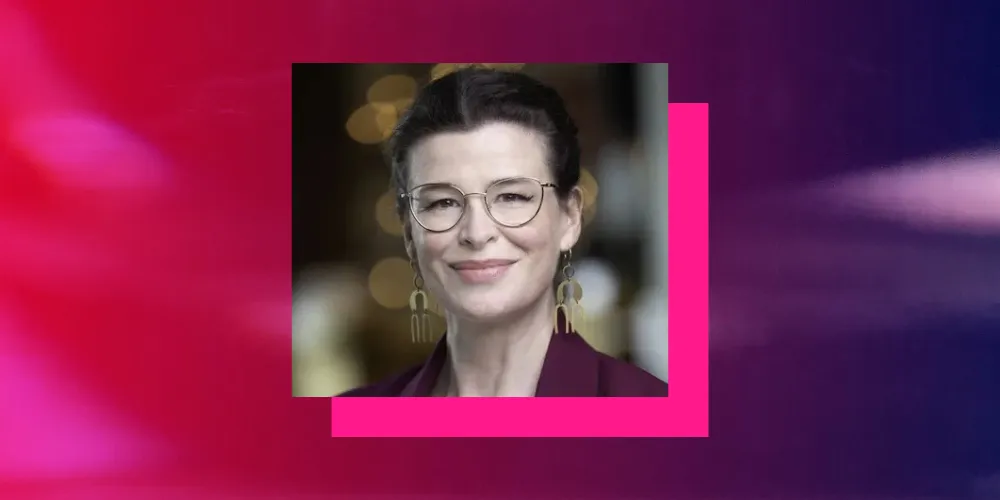
This Is Who We Are is a series featuring Columbia University School of the Arts’ professors, exploring their careers, pedagogy, and creative practices. Here, we talk with Adjunct Assistant Professor Anika Chapin '14, a graduate of the Dramaturgy Program, about how a childhood fascination with theatre evolved into a career, the value of a collaborative classroom, and the great opportunities that can result from ‘following your gut.’
Anika Chapin was introduced to theatre at an early age. Growing up in New York City with a father who worked in the industry, she spent much of her childhood attending performances. “I always just loved it. I always knew that was where I wanted to be, especially musicals. They were kind of my big love.” But while she knew the theatre was where she wanted to work, it took more time to determine what role she hoped to have within it. “I knew I didn’t want to be an actor, director, or writer.”
After earning her bachelor’s degree in Cultural Anthropology from Vassar College, Chapin began her career exploring various theatre jobs behind the scenes, hoping to better understand the many moving pieces behind a production and where she might fit. “It was a period of learning and discovery,” she said. She learned that she loved working as an assistant director, being in the room with and “having the ear of” the person who was making the decisions. She also enjoyed watching projects take shape and participating in casting. “There were all these different pieces, but I wasn’t sure how they all connected.”
It wasn’t until several years into her career that Chapin discovered Columbia’s Dramaturgy MFA Program on the School of the Arts’ website, and that’s when something clicked. “It instantly confirmed what I loved about theatre, how I fit, and what I wanted to do with my time. I wouldn’t have called myself a dramaturg before I came to Columbia, and it took reading that description to make me go, ‘Oh, yeah, uh-huh, that’s it.’”
Having been out of school for over five years, she was initially hesitant to commit to another degree, especially after spending several years building her career. “I knew that going back to school would be a massive time commitment, and I wanted to make sure I was ready to invest all that energy,” she said. Before making her decision, she reached out to Christian Parker, Dramaturgy Concentration Head and Professor of Professional Practice, to ask if she could sit in on one of his classes. He agreed.
“I remember sitting there and listening to people speak. The discussion was so intelligent, interesting, and engaging. And some of the people in that room have gone on to have very successful careers in the industry, as directors, as writers. They were all wonderful people, and I just remember thinking, ‘I want to be having these conversations. I want to be in these rooms, learning from these people.’”
“I remember sitting there and listening to people speak...I just remember thinking, ‘I want to be having these conversations. I want to be in these rooms, learning from these people.’”
Chapin’s experience at Columbia proved transformative, introducing her to a community of peers with whom she could exchange ideas. She particularly appreciated the program’s open-ended approach to dramaturgy, which didn’t impose a singular framework or set of rules for defining the practice. “There is no one way to be a dramaturg,” she said. “It is really designed with the practical application of academic tools in mind.”
The flexibility, she notes, is reflected in the many directions a dramaturgy degree can take a person. “At the theater I work at right now,” Chapin said, “The heads of IT and HR both have dramaturgy degrees.” The training develops a range of transferable skills. Within the theater, more traditional paths include literary management, new-work development, and research for classical productions, often working alongside a creative team.
After graduating from Columbia, Chapin continued working in theatre before returning to the School of the Arts in 2022 as an instructor. With a career molded by her love of musicals, she was particularly excited to bring that perspective to the classroom through her course, Dramaturgy and Musical Theatre, which recurs each spring.
“It was important to me that Columbia taught students how musicals work because they are large and unwieldy. You have a story told not only through script, but through music and lyrics,” she said. “A lot of questions come up with that element: How can the music convey emotions, while also including plot elements? Where do you put the songs in a musical? Where do you have a scene?”
The class investigates these questions through close readings and analyses of various past and modern musicals, examining how the text, songs, and stage design work together to tell a story. However, Chapin refrains from offering prescriptive rules or guidelines for how a musical should be organized. "It’s about providing students with resources for creative exploration and equipping them with the experience and knowledge they can bring to a musical writer to provide helpful feedback.”
She also includes opportunities to discuss the realities of the industry, inviting writers to speak with students about their work and the collaborative relationships between writers and dramaturgs. The course evolves each year, with new readings and adjustments to the syllabus. One constant, however, is the inclusion of at least one work Chapin is actively developing.
“I always find their perspective and notes to be so helpful,” she said. “I think it’s important for them to review something that’s very much in process and to have the opportunity to contribute to something new.”
“I think there’s something deeper that draws you to this work. I remember so clearly reading the description of what a dramaturg was and thinking, ‘Yes. This is it.’ It’s almost as if the work calls you to it.”
Chapin frequently collaborates on developing scripts—among other things—in her role as Director of Artistic Development at Signature Theatre in Arlington, Virginia, a position she has held for the past four years. In this role, she often plans seasons, develops productions, and searches for new work. “I have a foot in both worlds that way, which I love, and I’ve had the opportunity to collaborate with incredible artists,” she said. Some are artists whose work she has recently discovered and hopes to collaborate with, while others are longtime creative partners whose projects she has helped develop over several years.
One such project is Private Jones by Marshall Pailet, which Chapin hopes to see when it travels to London in January. Pailet began writing the show at a writers’ retreat Chapin had recommended him for. When he arrived, there was no show; by the end of the retreat, he had written the first act. Chapin had the opportunity to watch the work take shape before Signature Theatre presented its world premiere. “It’s such a wonderful show,” she said. “I’m getting to watch this show, which was a little bit of my dramaturgical baby, go out into the world.”
Chapin is also working on commercial projects, including the musical adaptation of A Wrinkle in Time, with playwright Lauren Yee, composer Heather Christian, and director Lisa N. Evans. “They're just unbelievable, and I get to be in the room helping make it happen. Sometimes I can't even fathom it. I'm just thinking, ‘What did I do to get here? This is so cool!’ I get to be part of this process, even if it's a small part.”
These experiences, both in developing new work and in the broader theatre industry, find their way back into Chapin’s classroom. She sees her professional practice as an active part of what she teaches, while recognizing that every faculty member in the Dramaturgy Program brings a different perspective to the field.
“It’s so interesting because you get all these different insights into people’s individual spheres of work: what it means to be a dramaturg, how they define the role, what they’re working on, and how that work manifests,” she said. “It’s always changing, and you get a different viewpoint from everyone.”
For Chapin, that sense of discovery is also what makes dramaturgy such a rewarding path. When asked what advice she would give to someone considering the field, she returned to her own experience of discovering Columbia’s Dramaturgy Program.
“There’s a feeling in your gut that the next thing you want to do is go to graduate school, learn from the people around you, and spend time in these rooms.” The professional opportunities and connections are valuable, she says, but they’re not necessarily the reason to begin. “I think there’s something deeper that draws you to this work. I remember so clearly reading the description of what a dramaturg was and thinking, ‘Yes. This is it.’ It’s almost as if the work calls you to it.”
And while there is no single career path or definition of what a dramaturg can be, Chapin believes following that initial curiosity can lead somewhere unexpected. “You don’t really know where you will end up; however, it can lead to some magical things.”