On A Global Scale: Collaborating Across Borders
On A Global Scale is a bi-weekly series about international co-productions by Columbia filmmakers.
Welcome to this fall’s final edition of On A Global Scale. This bi-weekly series celebrates the international spirit of the Columbia University film program and the incredible global collaborations coming out of it.
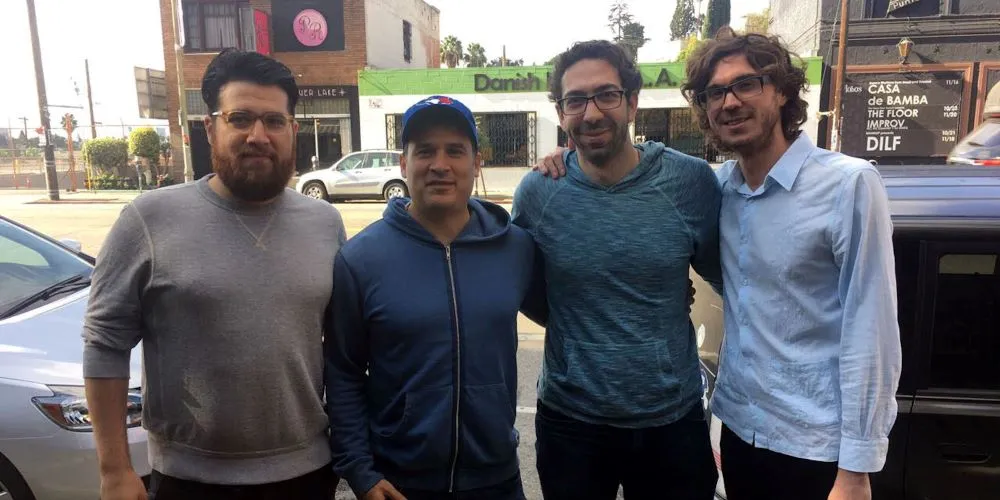
One of the most valuable take-aways from an education at Columbia is without a doubt the network of people who share the same passion for their craft. Oftentimes these connections blossom into wonderful collaborations on both a local and an international level. Alumni Mauro Mueller '13, David Figuera García '13, Mark Raso '12 and Mauricio Leiva Cock '13 know this better than most. As members of the incoming class of 2008, the four filmmakers decided to team up prior to their graduation and form their own production company together: Fidelio Films. Ten years later, the company has spread across the globe with offices in each of the founding members' home countries—Switzerland, Mexico, Canada and Colombia.
We spoke with Mauro Mueller about what drove them to take this step, how they choose their projects, and what makes them a successful team.
How did the four of you meet at Columbia and at what point did you decide to create Fidelio Films together?
Mauro Mueller: We all were in the incoming class of 2008. It was quite an international class and we decided at the end of our second year that we should combine forces and work together. That was in 2010. It was quite organic as we already collaborated on projects together and were and are friends. It has always been quite obvious to us that if you aren’t willing to spend your vacation or free time with the other partners, it’s not a good idea to run a company with them.
Was it difficult to transition from co-students to business partners?
MM: At first, the initial idea was to promote each other’s work at film festivals. Our 8-12s played at festivals and we were starting to think about our thesis films. We also wanted to have a true partnership and support system on our films so that we’d get notes on scripts as well as feedback during post and that at least one of us was always on set during production. On our first feature, Copenhagen, we all went to Denmark to support Mark, the writer and director, and produce the film. That was in 2012, before we even graduated.
How did Columbia factor into nourishing this collaboration between its students?
MM: Columbia has a great structure in which every student has to write, direct and produce in the first year. So while we all wrote and directed, we also had to produce and soon we realized that in order to have maximum control over how our films were shot, we’d need to find partners that were like-minded. It’s an added bonus that we understand the process from a writing and directing point of view and above all, know and understand our working processes. I think we also got a good understanding of some key techniques and rules of producing as we took many producing classes, including in our second year even though none of us had declared producing as a focus. We believe having a strong understanding of producing also makes us better writers and directors.
Fidelio Films has offices in Mexico City, Bogotá, Toronto and Zurich—cities from your home countries. How did you choose these locations?
MM: This was very organic. We all come from these places and the idea was to establish bases in these countries to tap into local funds. Also, we all are very much tied to our national film industries and have received various funding and recognitions so it makes sense to build on these networks. Film is a collaborative but also a very expensive process, so figuring out partnerships and funding is key to getting your films made.
Fidelio has a very global approach to storytelling. What kind of stories are you looking for right now?
MM: We do character driven stories that delve into the human experience. We probably tend to shift more and more towards genre material and we definitely broaden the scope and size of films we’re doing. Still, we continue to work on small intimate family stories, but now we also include larger horror and sci-fi stories that need considerably more resources. But from a story point of view, the most important is that we feel passionate about the projects and that the story and characters feel relevant to us. Overall, we all share a common sensibility for cinema and admire many of the same filmmakers.
Do you think people are drawn to international stories with a broad, universal appeal or those that are unique to a specific country/community?
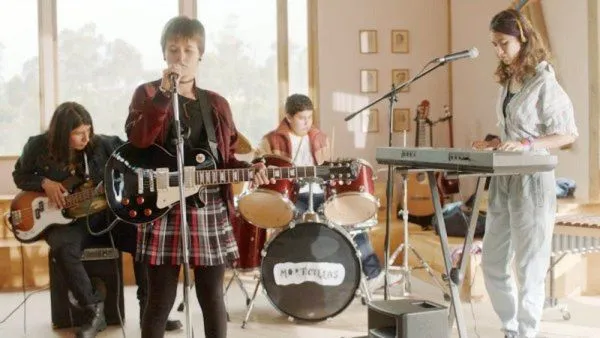
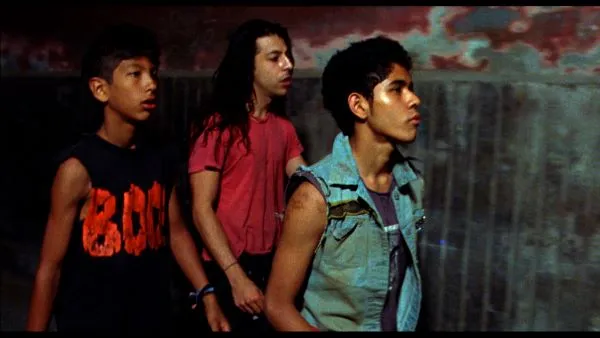
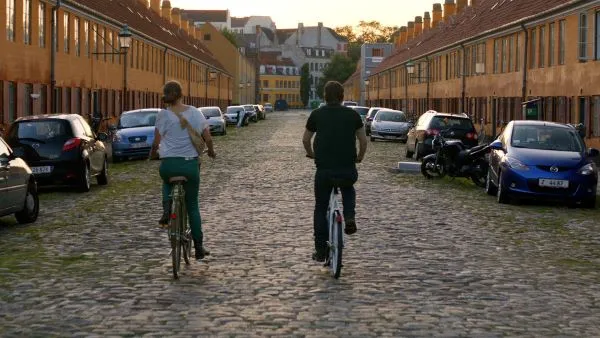
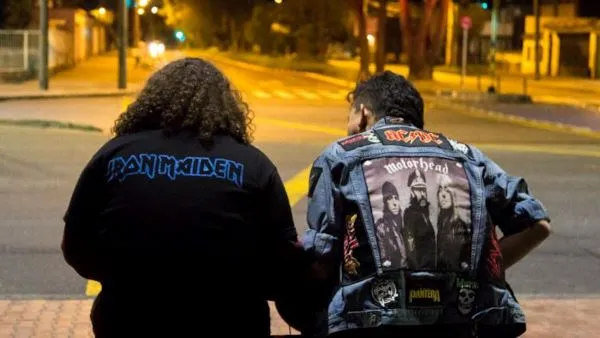
MM: I think the more local you go, the more universal it gets. At the end of the day, it’s about the human experience and then it doesn’t matter whether it’s a story of a middle aged woman in a small French town in Switzerland, an impossible love between two young people doing a bike tour through Copenhagen, an urban heavy-metal story about friendship in Bogotá, or an intimate family story set in a vacation house on the Pacific Ocean in Mexico told from the perspective of a teenage girl. They all have at its core characters we can relate to in one way or the other.
All of you have worked as writers, directors and producers on different projects. What does your development process look like?
MM: First and foremost, it is imperative that we are a team. We discuss our work and share our thoughts and we are relentless. Of course, it’s hard to get tough feedback but it’s always honest and we know there are no other factors at play. We also have implemented a process of carefully choosing our slate. We realize we can’t work on everything we feel passionate about but also, it needs to make sense for Fidelio. Each one of us has his own projects and we of course discuss them thoroughly and sometimes even co-write. And we have some projects we’re co-directing, too.
How has the pandemic affected the company?
MM: The pandemic helped us enormously to take some time, reflect, reshape our company, define our slate, and come up with a strategy for the next 3 years. We are now at a point where we have it much clearer what we want to do next while we continue to look for multiple alliances with partners and friends all over the globe (such as Gaumont International and Editorial Planeta, Latin America’s biggest editorial).
What shifts do you think will happen on the global film market due to it?
MM: Some of the changes are obvious; streamers and on-demand-services have gained even more popularity while the traditional movie theaters have suffered and maybe won’t ever fully recover. The extent of change in the sector is hard to foresee and there is much uncertainty. What we see is that digital platforms are major disruptors in the future TV and video market but it’s clear there is a thirst for content, so being able to create compelling content and control IP is crucial.
What projects is Fidelio working on right now?
MM: We have a slate of dozens of TV shows and feature projects in different development stages, which range from political thrillers and comedies to fantasy films and a great sci-fi adaptation, but all stories we feel the need to tell. We are also working on our first English-language TV show.
David has just wrapped head writing on a new television series for Netflix, Mark’s new sci-fi film Awake starring Gina Rodriguez and Jennifer Jason Leigh will come out next year on Netflix, Mauricio is in advanced development on two tv shows he created, we will produce a beautifully mystical film in Colombia that is already fully financed, we have just recently wrapped post-production on our Canadian sci-fi film Cosmic Dawn, directed by another Columbia student Jeff Moneo ’13 (CC) and I’m currently in prep on a six-episode mystery drama television series that I’m co-directing in Switzerland.
Fidelio Films is an independent production company based in Bogotá, Mexico City, Toronto and Zurich. Their approach to storytelling, focused on modern day cross-cultural narratives, has taken their projects to audiences worldwide. Focussing on the development of original and innovative content, as well as in fostering relationships with like-minded organizations and individuals, Fidelio Films co-produces, gap finances, develops and script-doctors projects in all languages, anywhere on Earth. In combination with creators from Latin American, North American and European, Fidelio Films builds original series from scratch with a unique perspective. The company has co-produced and co-developed content alongside companies such as Netflix, Dynamo, Imperative, Story House, Telemundo, Unscrypt and Amazon. In addition, Fidelio Films has produced a number of acclaimed short films, winning twice in a row in the Student Academy Awards with Under in 2012 and A World for Raúl in 2013. Their first feature film, Copenhagen, was theatrically released in North America in 2014.
Image Carousel with 4 slides
A carousel is a rotating set of images. Use the previous and next buttons to change the displayed slide
-
Slide 1: Still from 'Ruido Capital,' a TV series created by Mauricio Leiva Cock
-
Slide 2: Still from 'Ratitas,' directed by David Figueroa García
-
Slide 3: Still from 'Copenhagen,' directed by Mark Raso
-
Slide 4: Still from 'La Noche de la Bestia,' Directed by Mauricio Leiva Cock