Four Columbia Alums Represent their Nations in the Race for the 2026 Academy Awards
The race for the 98th Academy Awards is in full swing, with 91 countries putting forward the films they feel capture the artistic and cultural spirit of their nations. Showcasing everything from intimate character dramas to sweeping epics, this year’s selection includes four Columbia alums whose films have been selected as their countries' official submissions to the Academy Award for Best International Film.
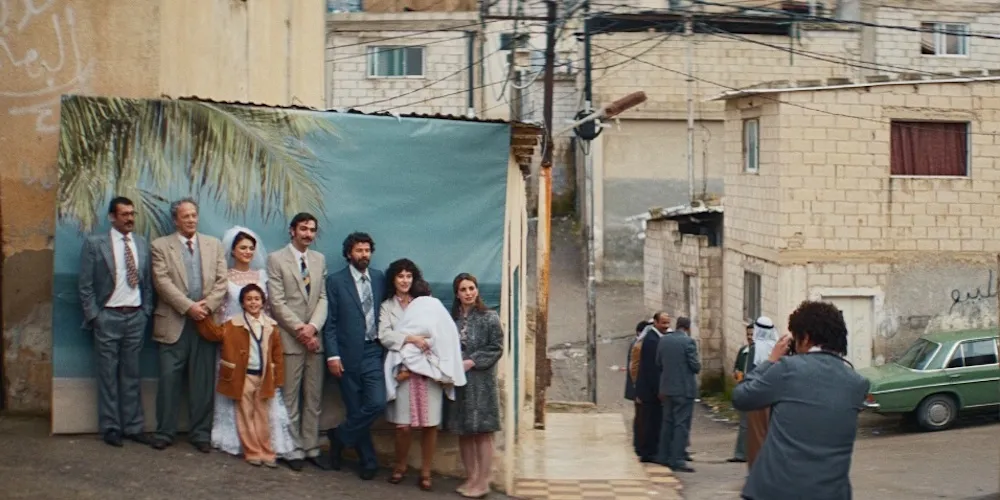
All That's Left of You, a film written, directed, produced, and starring Film alum Cherien Dabis '04, was selected by Jordan as their official entry. Loosely inspired by Dabis’s own family experience, All That's Left Of You is a sweeping historical drama that follows one family over seven decades. The Palestinian-American filmmaker embodies Hanan, mother to Noor, a headstrong teenager caught in the turmoil of a 1980 protest in the occupied West Bank. Facing the camera, Dabis quietly declares that she is here to tell us about her son, but in order to understand him, she must start at the very beginning.
The action then moves to Jaffa in 1948, during the Nakba when thousands of Palestinians were forced to flee their homes, and the audience is introduced to citrus farmer Sharif, who refuses to leave. He sends his family to safety, staying behind to protect their land—only to be captured when the city falls. A year later, as his young son Salim begins to accept that his father may never return, Sharif reappears at their doorstep, a broken shadow of the man he once was. It’s an insightful and humanizing touch that Dabis cast a real-life father and son in these roles. Decades pass, and as Sharif continues to be haunted by how quickly his entire world disappeared, Salim, now a father himself, builds a fragile life for his family in a dilapidated refugee camp in the occupied West Bank. Nearly a decade later, the West Bank is ablaze with resistance, and Noor, now a rebellious teenager, joins a protest that spirals into violence. Dabis’s portrayal of a protective mother anchors the narrative, and the lineage of men—tasked with embodying generational pain—forms the film’s tender core.
All That's Left of You premiered at Sundance earlier this year, and was also an official selection at the prestigious Telluride Film Festival. The film has already enjoyed a massively successful festival season, bringing home multiple awards such as the Audience Award for Best International Feature at the 2025 Sydney Film Festival, and the Golden Gate and Audience Awards at the San Francisco International Film Festival.
When we asked the Andrew Sarris Award recipient and Emmy-nominated director what she hopes for the film, she said, “For a film born from erasure, struggle, and love, to be recognized in this way feels like an act of joyful defiance. For me, the selection isn’t about validation but rather visibility. The hope that this moment helps the film reach the hearts and minds it was always meant to reach.”
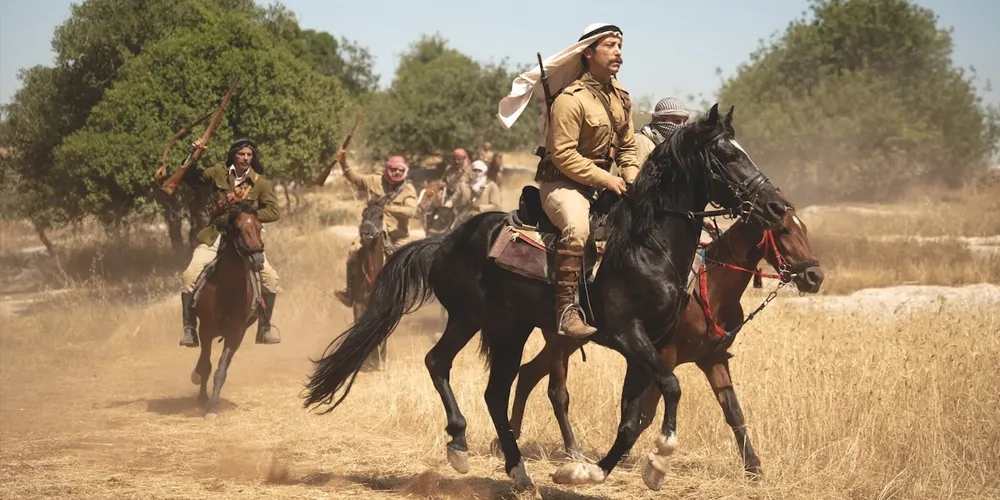
Palestine 36, a sweeping historical epic written and directed by Annemarie Jacir '02, is Palestine's official selection for the award. The film premiered at the Toronto International Film Festival to a roaring fifteen-minute standing ovation. Jacir is no stranger to the Oscars, either—the film marks her fourth feature to be selected as Palestine’s Oscar entry.
Palestine 36, which has been a decade in the making, explores the 1936–1939 Arab Revolt in which Palestinians rose up against Britain’s colonial rule. The veteran director who brought intimate Palestinian stories to life in Salt of this Sea, When I Saw You, and Wajib, tackles a key chapter in Palestinian history not seen on the big screen before by bringing to light the first mass Palestinian revolt against British Rule and Zionism in 1936.
Jacir has always been fascinated with this period in history, calling it the origin of today’s reality even if for others it remains a historical void. “What happened in 1936 sets the stage for what happens 12 years later. Everybody talks about 1948 and everything after, but the roots of all this begin so much earlier,” Jacir told Deadline prior to the Toronto premiere.
Jacir cleverly incorporated colorized archival footage of 1930s Palestine, showing beautifully constructed forts, energetic street markets, and individuals going about their daily lives—restoring vitality to an era often reduced to footnotes and emphasizing the humanity of the Palestinian people even as British officials sought to strip them of it. Palestine 36 stands as both a reclamation and a reckoning—an impassioned piece of work that confronts the origins of occupation and reminds us why rebellions are born.
Reflecting on the film’s selection, Jacir shared, “Being selected to represent Palestine for the Oscars is an incredible honor for me and my team especially as we are living the darkest moments of our history. In the most difficult circumstances, this film became an act of resistance against erasure, violence, and hate. My cast and crew came together and poured their hearts into this—it is what artists do. For me, representing our homeland is like we've won. The fact that this film even exists is a victory.”

Panopticon, written, directed and produced by George Sikharulidze '17, is Georgia’s official entry for the Oscars. The feature directorial debut of Sikharulidze—which premiered in the Crystal Globe competition at the 2024 Karlovy Vary International Film Festival—derives its name from French philosopher Michel Foucault’s idea of an all-seeing system of control.
The film places audiences in the tumult of post-Soviet Georgia, caught between liberalization on the one hand and arch conservatism on the other, as we follow the morally and sexually confused teenage introvert, Sandro. When Sandro’s devout father leaves for a monastery to become a monk and his mother remains stuck in the US awaiting her papers, the boy is watched over only by the unblinking gaze of a Jesus icon hanging on their wall and a disapproving atheist grandmother. With little to guide him, his most reckless and hormonal impulses soon begin to run rampant—he "accidentally" gropes a woman on the street and flashes himself so his neighbor can see him naked from her window. His friendship with the radical Lasha, a member of a far-right nationalist group, draws him deeper into moral confusion just as his sexual awakening and self-loathing collide.
Sikharulidze, who grew up in a rough neighborhood of Georgia’s capital, Tbilisi, in the 1990s with his grandmother, mother, and sister, was inspired to draw upon his own story of estrangement with his father as he developed the film at the Cannes Cinefondation Residency and the Torino Script Lab. As Sandro is pulled between faith and doubt, shame and desire, he searches for belonging in a society defined by religious conservatism and patriarchal codes and is only guided towards a more humane way of being through the help of the women in his life.
The film went on to receive the Commendation of the Ecumenical Jury at Karlovy Vary, the Parallels and Encounters Award for Best Film at Palić European Film Festival, Best Film and Jury Special Mention at Batumi International Art-House Film Festival, and competed at Festival Cinemed Montpellier.
According to Sikharulidze, “The selection of Panopticon as Georgia's submission for the Oscars carries a symbolic value to me more than anything else. In a time when the current government passed draconian laws that stifled our pursuit of values like democracy, freedom of speech, and artistic expression, when artists are imprisoned for exercising their rights to assemble and protest, when the filmmaking community has declared a boycott against the very entity that has selected Panopticon to represent Georgia, the news is inevitably bittersweet. But precisely for this reason, we aim to use this opportunity to talk about Georgia and let the world know of the injustices taking place in our country.”
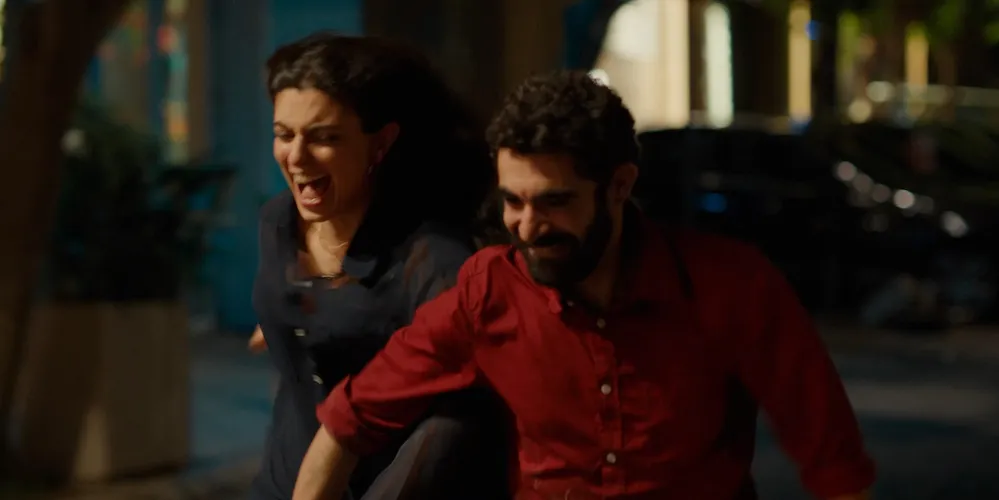
Marking the narrative feature debut of Lebanese filmmaker Cyril Aris '16 is A Sad and Beautiful World, Lebanon’s official selection for the award. Co-written by Aris and Bane Fakih '19, executive produced by Anna-Nora Bernstein '16 and Katharina Otto-Bernstein '92, and starring Mounia Akl '17, the feature film is an achingly romantic drama that follows two star-crossed lovers over three decades as they decide whether to build a family and a path to happiness in the country they love, despite the tragedies ravaging contemporary Lebanon.
The Beirut-set romance, which won the People’s Choice Award at Venice’s Giornate degli Autori, follows Nino and Yasmina (played by Akl), two people born seconds apart on one of Lebanon’s darkest days and bound by a cosmic pull neither of them can shake. Nino is an irrepressible optimist who clings to life in Beirut while Yasmina, pragmatic and weary, longs to escape. Together they embody the duality at the heart of modern Lebanon and their relationship becomes a mirror for a generation torn between staying and leaving, between the dream of a future and the pull of survival. Twenty-four years after being separated as children, celestial events conspire to reunite them once more. Despite her pessimistic outlook on life in Beirut, Yasmina can’t help but fall in love with Nino and abandon her emigration plans for a chance at a future with the only person who brought joy back into her life. However, tensions emerge when Yasmina becomes pregnant.
Aris, a member of the Academy of Motion Picture Arts and Sciences whose award-winning documentaries The Swing (which won the Jury Prize at the 2018 MedFilm Festival) and Dancing on the Edge of a Volcano premiered at Karlovy Vary, moves into fiction to answer a question that haunted him as he transitioned from adulthood to parenthood—is it fair to bring a child into a city that feels constantly on the verge of disappearing? “Every generation has their own trauma,” Aris told Deadline. “At some point you wonder if there’s any hopeful future left. And yet we’re still in love with this place.”
Shot in Beirut in the shadow of real geopolitical tension, and produced by Abbout Productions (Lebanon), Diversity Hire (US), and Reynard Films (Germany), A Sad and Beautiful World pulses with humor, tenderness, and grief. It’s a love story, but it’s also an act of cultural resistance, Aris told Newarab—a film made in a moment when, as Aris puts it, creating art in Lebanon is “a way of fighting back, proving our existence and re-asserting our culture.”
The full list of nominations for the 98th Academy Awards 2026 is scheduled to be announced on January 22, 2026 in a ceremony at the Academy’s Samuel Goldwyn Theater in Beverly Hills, with the awards ceremony itself scheduled for March 15, 2026. The event will be live streamed globally, as the Columbia community along with the rest of the world waits in anticipation for the results and celebrates the filmmakers whose stories have already left an indelible impression on the global stage.