Alumni Spotlight: Ian Olds '06
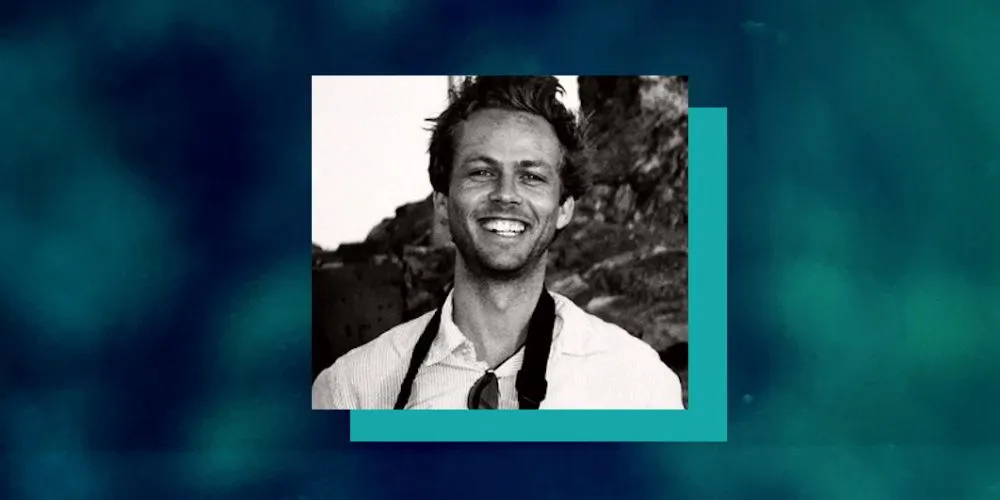
The Alumni Spotlight is a place to hear from the School of the Arts alumni community about their journeys as artists and creators.
Ian Olds '06 was awarded a Guggenheim Fellowship for his work as director of both narrative and documentary films. Directing credits include Burn Country (winner Best Actor Award at the Tribeca Film Festival and released by Samuel Goldwyn Films), the Iraq war doc Occupation: Dreamland (short-listed for an Academy Award for Best Documentary Feature and winner of the Truer Than Fiction Independent Spirit Award), and Fixer: The Taking of Ajmal Naqshbandi (winner of top jury prizes at Tribeca and Madrid, acquired by HBO Documentary Films and nominated for an Emmy for Outstanding Investigative Journalism). Olds’ short films have screened at numerous festivals including Sundance, Rotterdam, Los Angeles and his feature work has been supported by a MacDowell Fellowship, the Sundance Screenwriters Lab, the San Francisco Film Society, a Princess Grace Award, and a Media Arts Fellowship sponsored by the Rockefeller Foundation. He currently teaches directing at Columbia Univerisity’s graduate film program.
Was there a specific faculty member or peer who especially inspired you while at the School of the Arts? If so, who and how?
Eric Mendelsohn’s class was a revelation to me. I took it at a moment when I was beginning to formulate my own relationship to directing and his articulation of the way a shot could evoke meaning as opposed to show it was very powerful for me. Essentially he was talking about the poetic possibilities of film language that could be deployed within narrative work. This is something I think about to this day when I’m directing.
He also gave me some very valuable advice when I was struggling with existential questions about my vocation as a filmmaker. He looked me in the eye and said, “Sometimes you just have to shut up and drive.” And I said, “okay,” and went back to work. And I’m still working.
How did attending the School of the Arts impact your work and career as an artist?
It gave me space to experiment and time to find out what kind of filmmaker I wanted to be. I always knew that going to film school wouldn’t make me a filmmaker. It was just one phase of a long journey, but it turned out to be an important one for me. Before School of the Arts I had cinematic instincts; afterward I had those same instincts, but I also had a bunch more tools to go with them.
Crucially, It’s also where I met my writing partner Paul Felten. We work together almost daily—he’s the artistic comrade that keeps me sane during long periods of mad scribbling.
What were the most pressing social/political issues on the minds of the students when you were here?
September 11th happened two weeks into our first semester. Not only was it a moment of profound re-evalution, the aftermath of that event (specifically the invasion of Iraq under the banner of preemptive war) led me first to Iraq and then to Afghanistan as a documentary filmmaker. It was an incredibly powerful and formative period in my life. It’s also what led to my first narrative feature premiering at Tribeca this year. I directed, Paul and I wrote the script and another Columbia classmate, Joe Murphy, was one of the film's editors.