Directing Student Miles Sternfeld’s Revivals Conjure Bold Surprises
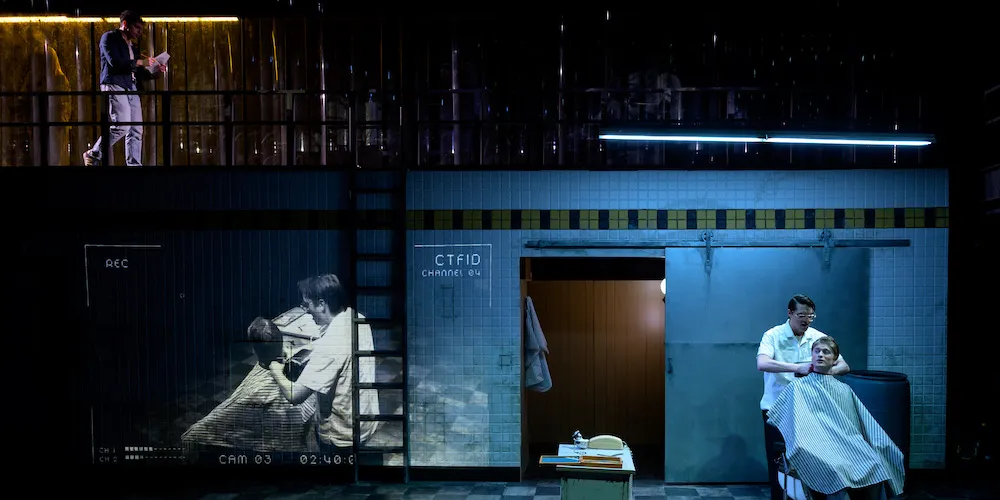
Directing student Miles Sternfeld has always craved bringing an unexpected moment to a musical from the canon. Now he has helped execute the biggest surprise on Broadway. Sternfeld spent the summer as the directing intern on Sunset Boulevard, and he’s not allowed to tell you what happens in Andrew Lloyd’s bold, new revival of the classic musical.
Lucky for us, the New York Times and countless tourists on social media have leaked footage: a figure exits a service door onto Shubert Alley, and a motley crew follows. Tom Francis, the male lead, struts down the sidewalk, facing a cast member holding a video camera. He serenades the pedestrians as well as the audience, who are screened the footage on a live feed.
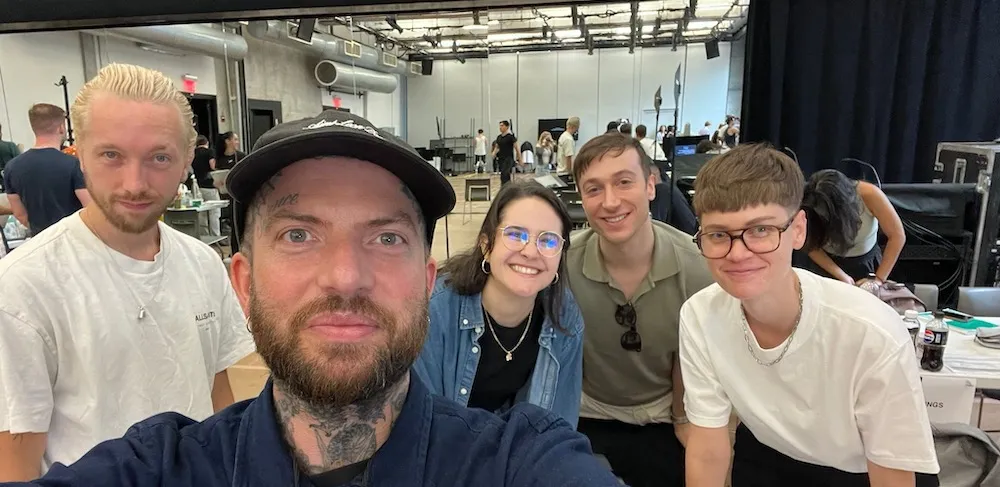
“It became independent guerilla theatre in the context of Broadway,” Sternfeld said, who served as directorial intern throughout the show’s rehearsals. Few people knew that fourth-wall-breaking scene would move onto the street until tech week, when rehearsals moved into the St. James Theatre.
Sunset Boulevard came to Broadway after a run in London’s Savoy Theatre racked up 7 Olivier Awards, including for Best Musical Revival. Director Jamie Lloyd is the third director to bring Andrew Lloyd Weber’s musical to Broadway. Its plot is based on the 1950 film noir—a fallen silent film star’s relationship with an upstart screenwriter ends in tragedy—but Lloyd’s staging is minimalist, hip, totally original.
The street scene is six minutes of all hands on deck. “It’s video. It’s sound,” Sternfeld said. “Some of the directing team would be on the street and others of us would be in the theater watching the footage and giving feedback. There was a lot of experimentation within the work they had set. It felt like a field trip.”
Appropriately, Sternfeld’s primary interest as a director is on revivals that transform canonical works. He had followed Sunset Boulevard’s initial run on London’s West End, but wasn’t able to go. “I heard rumblings that it was going to transfer [to Broadway],” he remembered. “Once it announced, I said, ‘I gotta jump on this.’”
Theatre Professor and Head of the Directing Concentration Anne Bogart, Sternfeld’s advisor, connected him with Jamie Lloyd over email. The two sat down for coffee while Lloyd was a visiting artist at Columbia. “I got an email after—’We’d love to have you, come on,’” Sternfeld said. “I know people say don’t meet your idols. I think that’s terrible advice.”
While Lloyd might be one of Sternfeld’s idols, he was referring to Anne Bogart. Her book A Director Prepares sparked an interest in directing that eventually led Sternfeld to drop out of musical theatre school, where he had enrolled as an actor.
Sternfeld went on to found New City Music Theatre, a theatre company dedicated to reimagining canonical musicals. When Bogart eventually interviewed him for Columbia, he was star-struck.
“I was so intimidated by Anne, because she’s so smart,” he said. To his surprise, Bogart was nothing like the stern auteur he had conjured in his mind. “She’s so giving and wonderful, so I immediately relaxed a bit,” Sternfeld said. When he got into the Theatre program, administration told him he would need his undergraduate degree before he could enroll. Sternfeld finished his coursework online that summer.
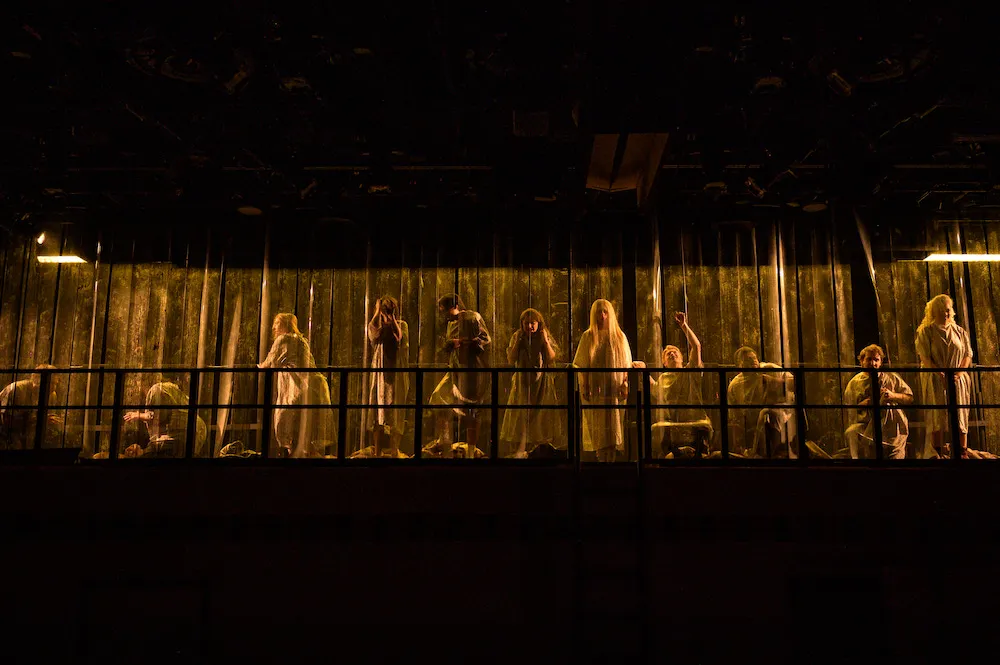
Sternfeld is now set to graduate from the School of the Arts with his MFA. His thesis production was a revival of Sweeney Todd, recently staged at the Lenfest Center. It sold out almost immediately. Rather than taking place in a campy, Victorian London, Sternfeld’s Sweeney Todd is set in twentieth century Middle America.
Sternfeld borrowed aspects of Lloyd’s approach as he started reimagining the classic musical. Lloyd removed all of Sunset Boulevard’s iconography, Sternfeld said, in search of the essence of the story. “Norma Desmond isn’t wearing a turban,” Sternfeld said. “There’s no staircase she’s coming down. All that was taken out of the room. It’s the actors and the text, their voices, their bodies, their emotions.” When Lloyd stripped away the set dressing, what was at the core of the show?
The core of Sunset Boulevard is its star, Norma Desmond. Nicole Scherzinger, the onetime Pussycat Doll, does not play a crone of a bygone era, but a woman aged out of Hollywood while still in her prime. Scherzinger’s career as a former teen idol opens parallels: “They’re always asking the question of where does Norma begin and where does Nicole end,” Sternfeld said. “She’s singing it in her own way, more pop, which is also shifting our perception of Norma....Why is the industry pushing her aside?”
For Sternfeld, Mrs. Lovett emerged as a character with similar transformative potential in Sweeney Todd. “Angela Lansbury is so different than Patti LuPone who is so different than [Annaleigh] Ashford,” Sternfeld said. “When you put [Mrs. Lovett’s] story and her action in a naturalistic context, there is a lot more that comes out in terms of her need to survive, her financial situation, [how] over the course of the play she becomes enmeshed with Sweeney.”
Judge Turpin is another character who transformed when transplanted to a twentieth century Middle America. To refine his angle on the uber-conservative judge, Sternfeld studied religious cults for inspiration, finding resonance in the documentary Keep Sweet, Pray and Obey, which examines the case of infamous polygamist Warren Jeffs. “The religious-political aspect of the judge is a perfect match for what someone might experience in Middle America,” Sternfeld said.
Sternfeld grew up in the suburbs of Cleveland, a hotbed of musical theatre. His uncle, a theatre director, introduced young Sternfeld to Hal Prince-directed musicals, like Sweeney Todd.
“All of Hal’s work has this element of showmanship, surprising the audience, doing something that shocks them or thrills them,” Sternfeld said. “That’s always been the kind of work I want to do. I love surprising an audience and building the anxiety, where people are just leaning forward to see what is about to unfold.”
Sternfeld remarked that it’s easy for a director to grow numb to the innovations they have brought to a production. The logistics and grueling rehearsals, the sheer repetition, build a tolerance hard for audiences to imagine. To serve that audience, the creative team must conjure and maintain the surprise of the first encounter. Sternfeld takes this magic act seriously, and always has.
In Directing students’ first year, they all work on Greek plays. Sternfeld chose a scene from Agamemnon and turned it into a red carpet press conference. Before his audience, his classmates, entered the theater, he snuck in twenty people posing as paparazzi. The extras were armed with flash bulbs and microphones. He made his classmates sign paperwork before they could enter the theater. Then the back door opened to a cacophony of sound and light.
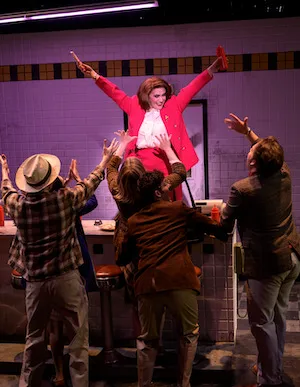
Sternfeld is now set to graduate from the School of the Arts with his MFA. His thesis production was a revival of Sweeney Todd, recently staged at the Lenfest Center. It sold out almost immediately. Rather than taking place in a campy, Victorian London, Sternfeld’s Sweeney Todd is set in twentieth century Middle America.
Sternfeld borrowed aspects of Lloyd’s approach as he started reimagining the classic musical. Lloyd removed all of Sunset Boulevard’s iconography, Sternfeld said, in search of the essence of the story. “Norma Desmond isn’t wearing a turban,” Sternfeld said. “There’s no staircase she’s coming down. All that was taken out of the room. It’s the actors and the text, their voices, their bodies, their emotions.” When Lloyd stripped away the set dressing, what was at the core of the show?
The core of Sunset Boulevard is its star, Norma Desmond. Nicole Scherzinger, the onetime Pussycat Doll, does not play a crone of a bygone era, but a woman aged out of Hollywood while still in her prime. Scherzinger’s career as a former teen idol opens parallels: “They’re always asking the question of where does Norma begin and where does Nicole end,” Sternfeld said. “She’s singing it in her own way, more pop, which is also shifting our perception of Norma....Why is the industry pushing her aside?”
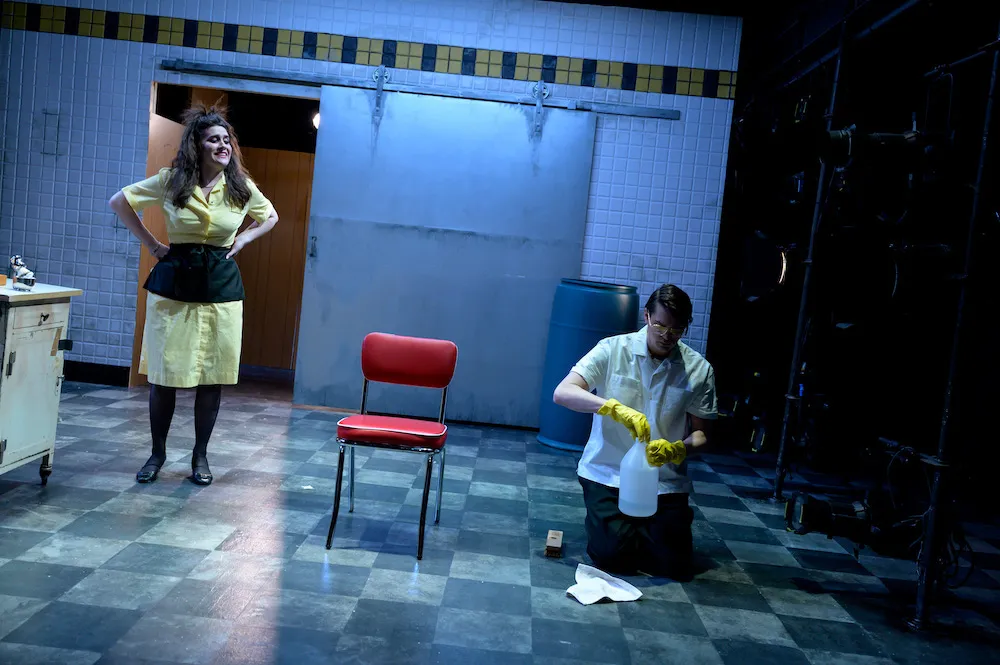
For Sternfeld, Mrs. Lovett emerged as a character with similar transformative potential in Sweeney Todd. “Angela Lansbury is so different than Patti LuPone who is so different than [Annaleigh] Ashford,” Sternfeld said. “When you put [Mrs. Lovett’s] story and her action in a naturalistic context, there is a lot more that comes out in terms of her need to survive, her financial situation, [how] over the course of the play she becomes enmeshed with Sweeney.”
Judge Turpin is another character who transformed when transplanted to a twentieth century Middle America. To refine his angle on the uber-conservative judge, Sternfeld studied religious cults for inspiration, finding resonance in the documentary Keep Sweet, Pray and Obey, which examines the case of infamous polygamist Warren Jeffs. “The religious-political aspect of the judge is a perfect match for what someone might experience in Middle America,” Sternfeld said.
Sternfeld grew up in the suburbs of Cleveland, a hotbed of musical theatre. His uncle, a theatre director, introduced young Sternfeld to Hal Prince-directed musicals, like Sweeney Todd.
“All of Hal’s work has this element of showmanship, surprising the audience, doing something that shocks them or thrills them,” Sternfeld said. “That’s always been the kind of work I want to do. I love surprising an audience and building the anxiety, where people are just leaning forward to see what is about to unfold.”
Sternfeld remarked that it’s easy for a director to grow numb to the innovations they have brought to a production. The logistics and grueling rehearsals, the sheer repetition, build a tolerance hard for audiences to imagine. To serve that audience, the creative team must conjure and maintain the surprise of the first encounter. Sternfeld takes this magic act seriously, and always has.
In Directing students’ first year, they all work on Greek plays. Sternfeld chose a scene from Agamemnon and turned it into a red carpet press conference. Before his audience, his classmates, entered the theater, he snuck in twenty people posing as paparazzi. The extras were armed with flash bulbs and microphones. He made his classmates sign paperwork before they could enter the theater. Then the back door opened to a cacophony of sound and light.