Digital Storytelling Lab Announces 2025 Digital Dozen
Columbia’s Digital Storytelling Lab (DSL), the School of the Arts’ hivemind for new media exploration, has announced the winners of its 10th Annual Breakthroughs in Storytelling Awards.
The Awards, organized by Lab Director and Associate Professor of Professional Practice Lance Weiler with longtime Lab-colleague Frank Rose, were pioneered a decade ago to celebrate narrative projects the world over, with an eye for innovation.
The expansive program culminates each year with the Digital Dozen, twelve projects that push the boundaries of digital storytelling. From this pool of winners, two additional honors are awarded, the Special Jury Prize, and the Breakthroughs Prize.
The 10th Anniversary Awards were announced via Zoom on Sunday, April 13. While the Awards avoid specific categories when seeking out projects, the winners were presented via four themes.
First up among the presenters was Kat Mustatea, a 2024 winner for her project Voidopolis, introducing the theme Subversive Narratives. Winners included Sweet Dreams, by Marshmallow Laser Feast, an interactive journey behind the scenes of the fictional “Real Good Chicken” company; Lennox Mutual, by Candle House Collective, an immersive “customer service” line that invites audiences to engage with representatives over several months; and The Game of Whispers, by Parag K. Mital, a generative artwork set in Delhi’s Red Fort during the Mughal Empire as AI-driven NPCs (non-playable characters) spread misinformation.

Rose then took the platform to introduce the next theme, Embodied Narratives, whose winners included Ceci est mon coeur, by Nicolas Blies and Stéphane Hueber-Blies, an immersive installation in which visitors wear a luminescent garment that turns their body into the story; Drinking Brecht: An Automated Laboratory Performance, by Sister Sylvester, “scientific theater” that turns DNA from Brecht’s mid-century Berliner Ensemble into a drink for audiences; and Eclipsing, by Point A, an immersive soundwalk created around the 2024 total eclipse in Austin, Texas.
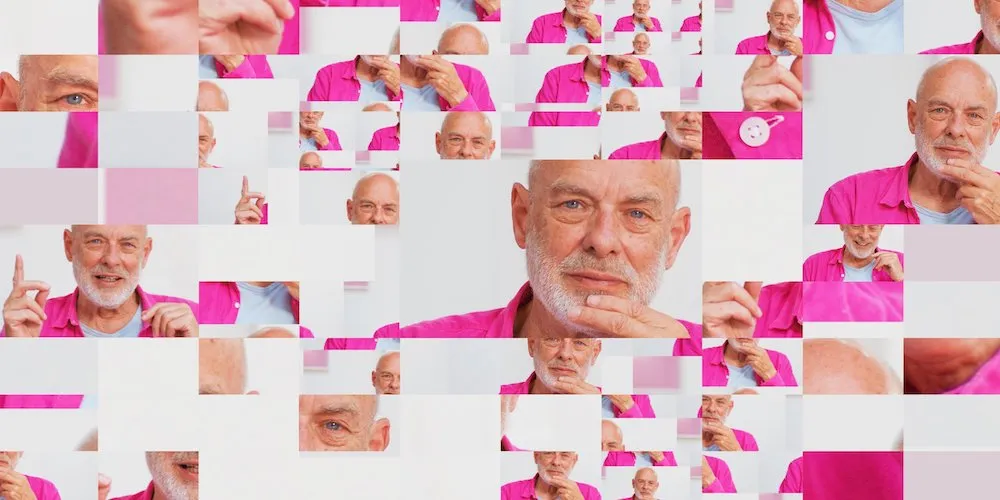
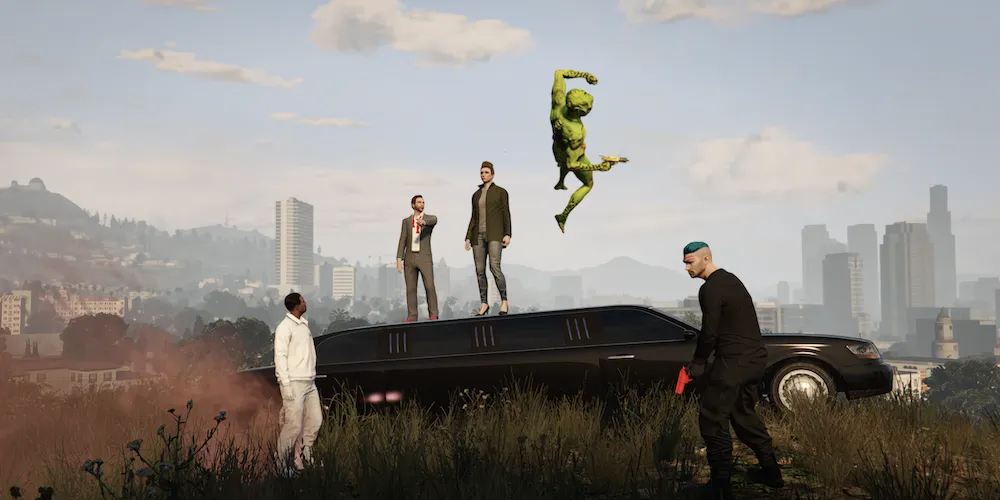
Next up was Weiler, introducing the theme Flexible Narratives, whose winners included Ancestors, by The Smartphone Orchestra, an interactive experience that uses AI to connect audiences with a vision of their family ties generations into the future; Grand Theft Hamlet, by Sam Crane and Pinny Grylls, a documentary featuring a pandemic performance of Shakespeare’s Hamlet staged entirely within the Grand Theft Auto video game; and Eno, by Gary Hustwit and Brendan Dawes, a documentary about the eponymous musician that used generative software to present a different version of the film every single screening.
The last theme of the night was Living Narratives, introduced by new media artist and researcher Sandra Rodriguez. The winners included Fortuna and the Immortality Garden (Machine), by Kara Walker, a museum installation that features automatons in vignette and printed fortunes for visitors; Cat Royale, by Blast Theory, an experiment featuring three cats living with an AI-controlled robot arm catering to their needs; and Kerosene Chronicles. Fungus, by Where Dogs Run, a project that features four robots interacting using data from the kerosene fungus in their fuel tanks.
After the winners were introduced, attendees of the open-to-the-public event were invited to enter breakout rooms via Zoom, open dialogues where creators from each theme talked about their work and process. In one room Crane and Grylls reclined on a bed in their London flat (past midnight local time), discussing how to deliver Hamlet’s famed soliloquy without the (video game) cops showing up. In another Mital leaned into his desktop mic, recalling his mother’s warnings about presenting his project in India’s more conservative north, and the importance of understanding AI’s capacity for misinformation.
Attendees were then returned to the central meeting room for the awarding of the Special Jury Prize, a standout entry from the Digital Dozen selected specially by the Lab’s Awards Committee.
This year’s Jury Prize went to Where Dogs Run, an art collective composed of Alexey Korzukhin, Olga Inozemtseva, Vladimir Bulatov, and Natalia Grekhovafor, for their project Kerosene Chronicles. Fungus, which featured four robots interacting and strategizing. As the fungus in their fuel tanks changed the smell of their kerosene, the robots used that smell to seek each other out, creating a mode of communication between machine and organism. This latest iteration was first presented at exhibitions in Slovenia and Austria, where audiences were invited to witness the plight of the four robots in real time.
Next came the night’s final Award, the Breakthrough Prize, chosen by Columbia faculty to highlight a project that represents the spirit of innovation.
This year’s Breakthrough Prize went to Hustwit and Dawes for Eno, the generative documentary that never shows the same cut twice. Pulling from Hustwit’s interviews with the acclaimed musician, Dawes developed a software that created a new version of the film for every screening. The documentary celebrates Brian Eno’s storied career and artistic exploration of technology, a legacy in keeping with the film’s inventive telling of his story.
In addition to honoring recipients, the Awards are also an engine for building and maintaining a digital record of projects that may not otherwise be publicly preserved and accessible; a living document of the rapidly changing digital environment, and a central part of the DSL’s continued mission.
Visit the archive and explore winners past and present here.