We be the luminous blues…
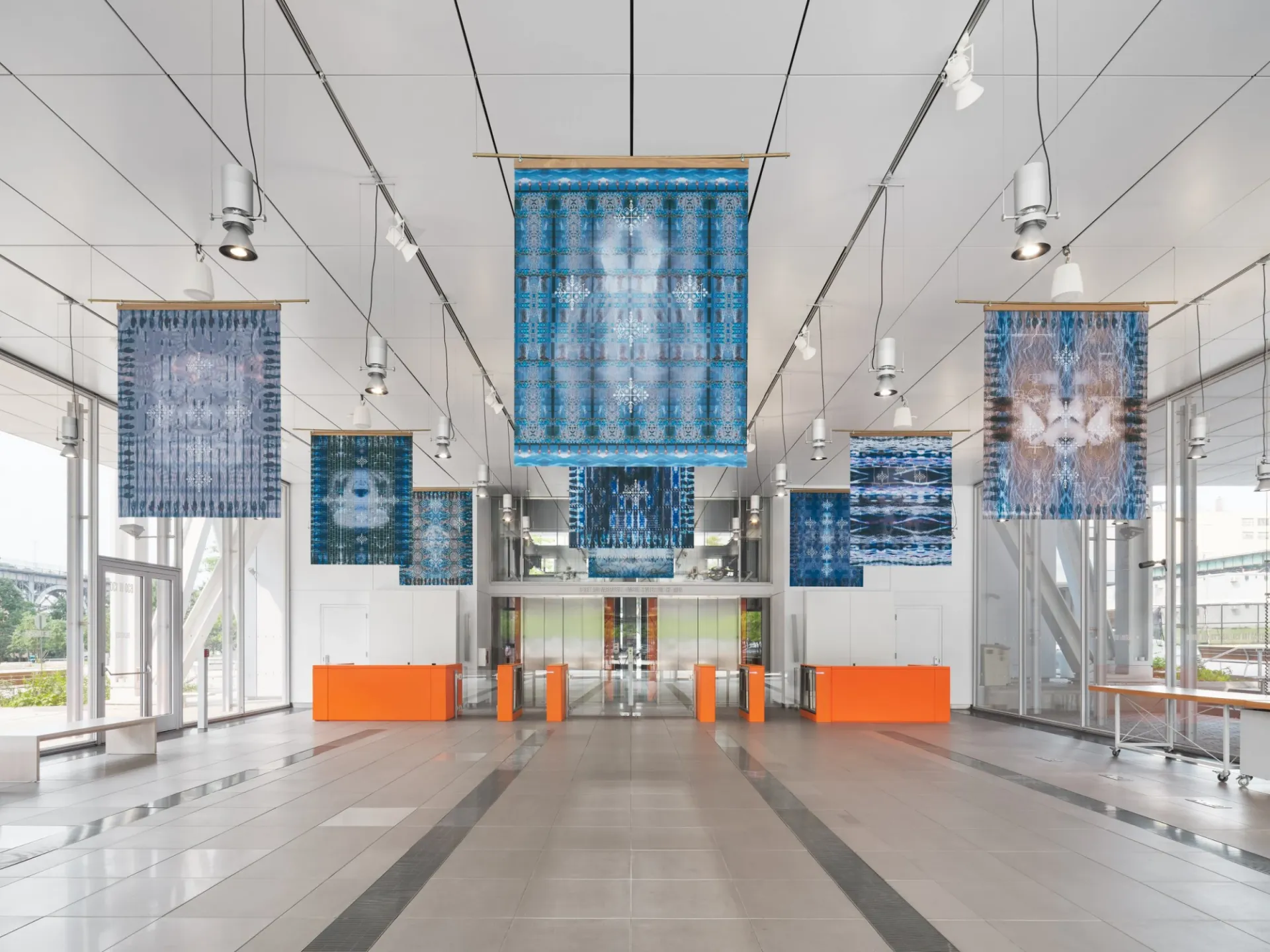
Photo: Olympia Shannon Studio.
We be the luminous blues… features:
Ruth Benedict (1887–1948)
PhD in Anthropology, GSAS 1923
A foundational figure in the field of anthropology, Benedict was the first woman to be appointed to a full-time faculty position at Columbia, where she taught between 1924–48 and authored Patterns of Culture and The Chrysanthemum and the Sword, among other canonical books.
Marie Maynard Daly (1921–2003)
PhD in Chemistry, GSAS 1947
The first African American woman to receive a PhD in Chemistry, Daly’s groundbreaking teaching and research at Rockefeller University, Columbia's College of Physicians and Surgeons, and Albert Einstein College explored the effects of diet on the heart and circulatory system.
Annie Elizabeth “Bessie” Delany (1891–1995)
DDS in Dental Medicine, Dental and Oral Surgery 1923
The second African American woman to be licensed as a dentist in New York, “Dr. Bessie” cared for her local Harlem community and co-authored the New York Times bestseller, Having Our Say: The Delany Sisters' First 100 Years, with her sister, “Sadie.”
Sarah Louise “Sadie” Delany (1889–1999)
BS in Household Arts and MA in Household Arts, Teachers College 1920, 1925
Delany was the first African American woman to teach home economics in New York City public schools before co-authoring a bestselling memoir with her sister. “I never let prejudice stop me from what I wanted to do in this life,” she wrote at age 104.
Ella Cara Deloria (1889–1971)
BS in Hygiene and Physical Education, Teachers College 1915
Born on the Yankton Sioux Reservation, Deloria preserved the language and culture of the greater Sioux Nation through teaching, fieldwork, and scholarship. Among her eight books, The Dakota Way of Life was deemed “a definitive, monumental work” by Tribal College Journal.
Zora Neale Hurston (1891–1960)
BA in English, Barnard 1928; GSAS 1934–35
The first African American woman to graduate from Barnard College, Hurston pursued graduate studies in anthropology at Columbia, conducted field work in Florida and the Caribbean, and wrote plays, short stories, essays, and beloved novels such as Their Eyes Were Watching God — one of the most important novels of the Harlem Renaissance and the canon 20th Century literature.
James, Jamaica, Cuffy, Prida, Caesar, Jenny, Betsy, Pompey, Richard Jenkins and All the African Ancestors Enslaved by the Bard Family
According to the Columbia University and Slavery research and justice initiative, the founder of Columbia's College of Physicians and Surgeons, Samuel Bard, enslaved at least nine individuals, including the children Cuffy and Prida; James, who escaped enslavement in 1776; and Richard Jenkins, who eventually served for 40 years as sexton of St. James Church in Hyde Park, New York.
Mabel Ping-Hua Lee (1896–1966)
BA in History and Philosophy, Barnard 1916; MA in Education Administration, Teachers College 1918; PhD in Economics, GSAS 1921
Born in Guangzhou, Lee was the first Chinese woman to earn a PhD in Economics in the United States. An activist and minister, she advocated for women's suffrage and gender equality even as the Chinese Exclusion Act prevented her from voting. She also provided services to her Chinatown community as leader of the First Chinese Baptist Church and the Chinese Christian Center.
Antonia Pantoja (1922–2002)
MS in Social Work 1954
Pantoja founded the influential organization ASPIRA in 1961 to promote youth education, leadership, and pride in New York City's Puerto Rican community. A celebrated organizer, activist, and educator, she helped to implement bilingual education in public schools and co-founded the Universidad Boricua (now Boricua College) in 1970. She was awarded a Presidential Medal of Honor by President Bill Clinton in 1996.
Paul Robeson (1898–1976)
LLB in Law 1923
Robeson practiced law and performed internationally upon graduating from Columbia. He won audiences on Broadway as Othello and in Hollywood films such as Showboat, in which he sang his signature Ol Man River. His wide ranging political activism focused on civil rights despite threats and censure under McCarthyism.
Frederick Wells (1896–1979)
Attended Law 1924
During his first semester at Columbia, Wells endured death threats and a cross burning by the Klu Klux Klan while living in Furnald Hall — precipitating his transfer to Cornell University. Wells served as Industrial Secretary for the Urban League in California. He later researched the socioeconomic living conditions of African Americans in Upstate New York for the Association of Negro State Builders and helped to develop public housing in New York City.