Jane M. Gaines
Jane M. Gaines is Professor of Film, Columbia University, and Professor Emerita of Literature and English, Duke University who in 2018 received the Society for Cinema and Media Studies Distinguished Career Award and in 2022 was awarded an Honorary Doctorate from the University of Stockholm, Sweden. She is author of three award-winning books: Contested Culture: The Image, the Voice and the Law (North Carolina, 1991) and Fire and Desire: Mixed Race Movies in the Silent Era (Chicago, 2001) and Pink-Slipped: What Happened to Women in the Silent Film Industries? (Illinois, 2018). Her articles on intellectual property and piracies, documentary theory and radicalism, feminism and film, early cinema, and critical race theory have appeared in Cinema Journal, Screen, Critical Inquiry, Cultural Studies, Framework, Camera Obscura, and Women and Performance. She is currently working on the book project titled What Happened? : Documentary Media & The Dilemmas of Historical Time.
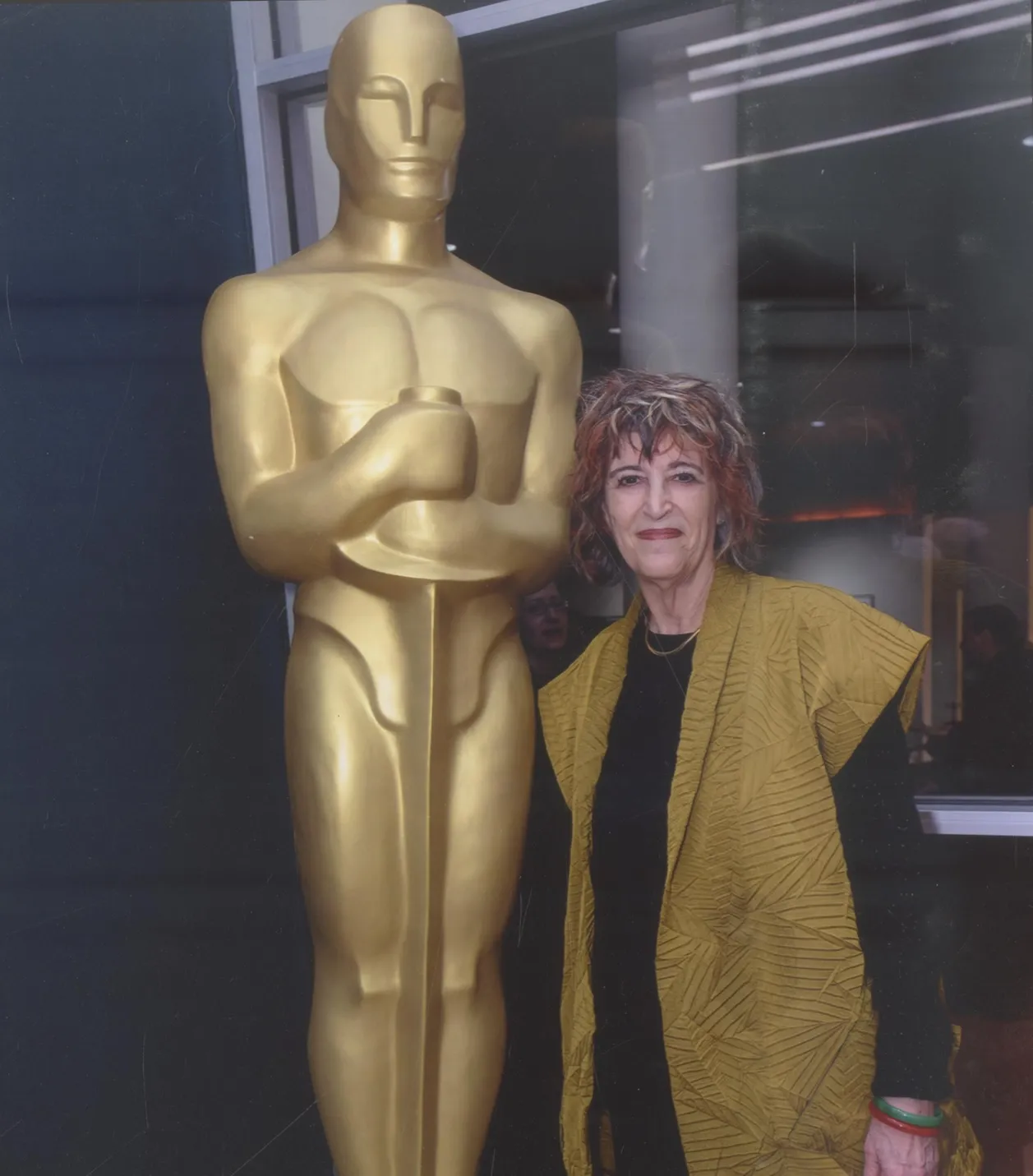
Professor Jane Gaines delivered lecture. Academy of Motion Picture Arts & Sciences Scholars Award. Mary Pickford Theatre, Los Angeles. 2019
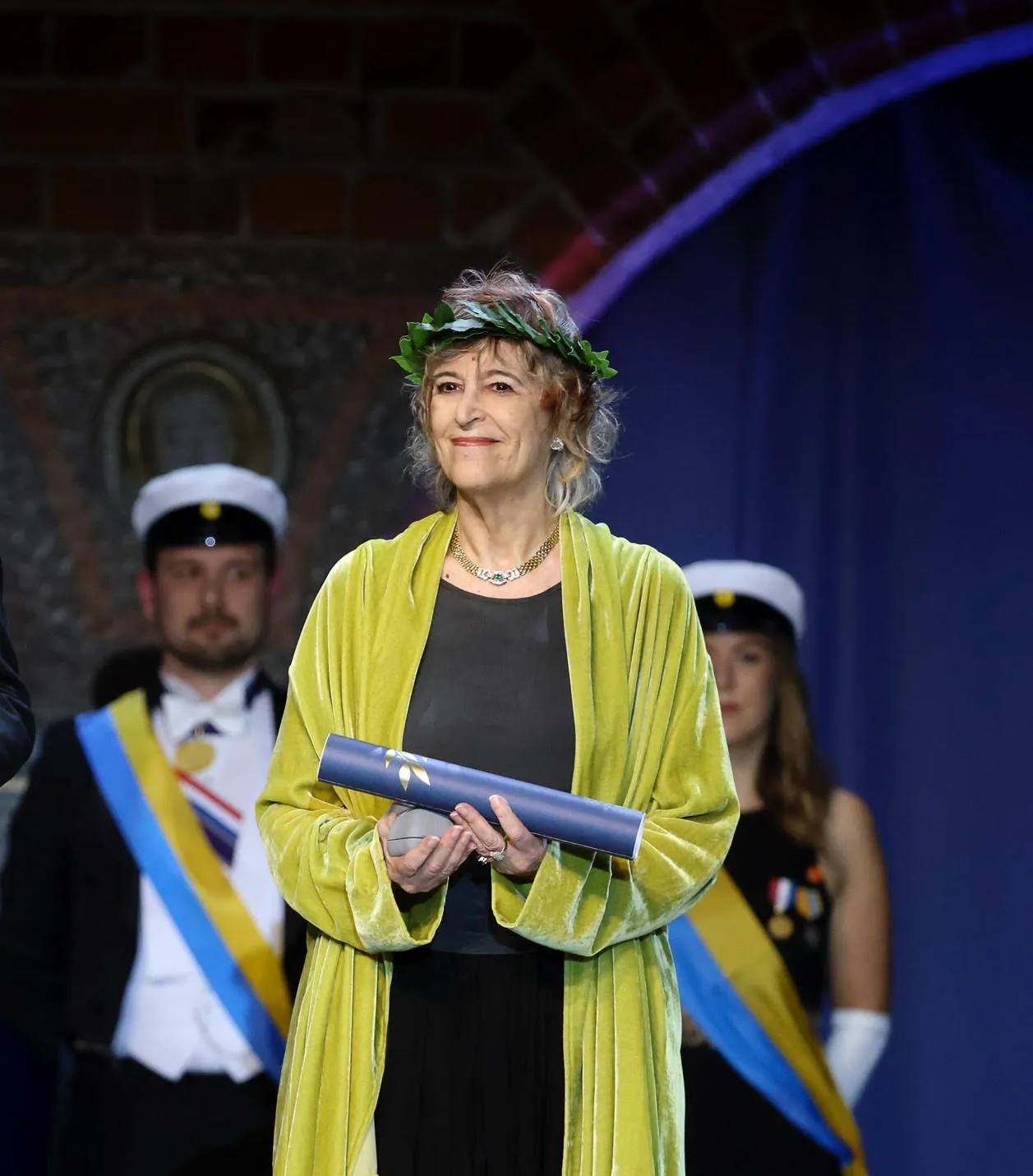
Jane Gaines, Professor of Film and Media Studies, receives an honorary doctorate in the Humanities from the University of Stockholm, Sweden (academic year 2022–2023).
Select Publications
Women They Talk About Project
The Women Film Pioneers Project database, supported by Columbia University Libraries, celebrated their 10th Anniversary at the Museum of Modern Art in November 2023. The American Film Institute "Women They Talk About" Project, funded by the National Endowment for the Humanities, uses the data from the Columbia University's Women Film Pioneers Project (WFPP) silent era research.
Books
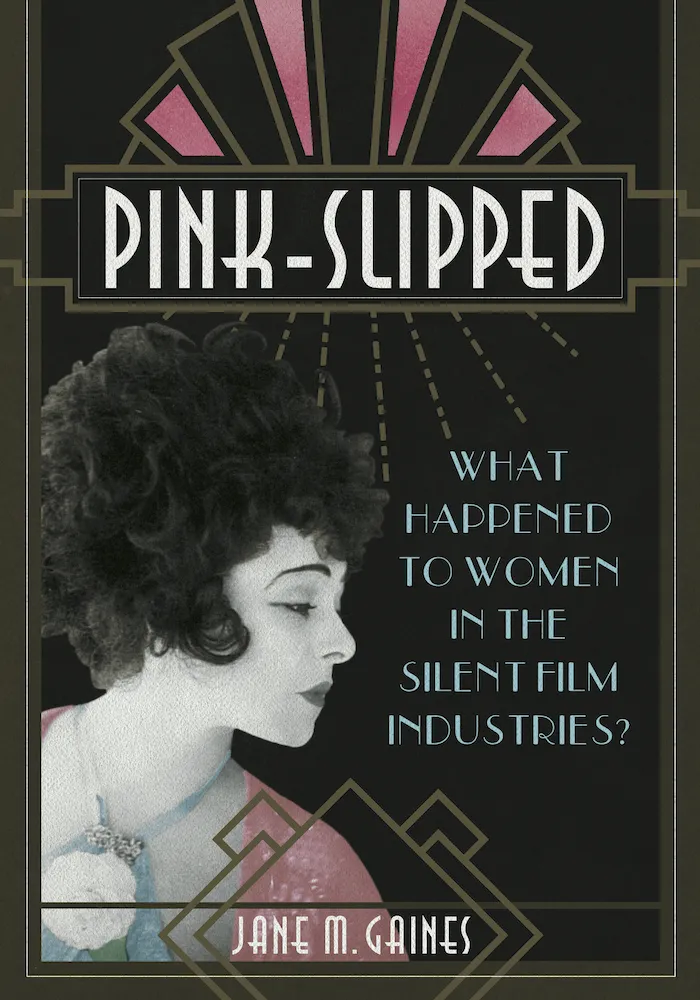
Pink-Slipped: What Happened to Women in the Silent Film Industries? (University of Illinois, 2018).
Fire and Desire: Mixed Race Movies in the Silent Era. University of Chicago Press, 2001.
Contested Culture: The Image, the Voice, and the Law (University of North Carolina, 1991).
Early Chinese Cinema’s Two-Way World Flows. Ed. with Kristine Harris, Yanfei Song, and Xinyi Zhao. (Routledge, forthcoming, 2026)
Online Publications
Editor: In Media Res Special Issue: “Critique of Audiovisual Criticism”: January, 2026
Introduction: “What Do Words Have to Do With Images in the Video Essay?”
“’The Instant in Which…’: What Big Jet TV Livestreaming and TikTok Cat Videos Have in Common.”
"Images of Struggle as Having “Lives of Their Own"—Or Not." In Media Res (15 December 2023)
“How Wrong We Were: Women in the Silent Era American Film Industry.” American Film Institute
Interview: Andrew Van Dam,“Films Most Often Assigned in College,” Washington Post (9 September 2022)
"Documentary Theory Can Never Be the Same After George Floyd." Visible Evidence Forum. (August 2020).
"Alice and the Too Many Mattresses," in Jane Gaines, Radha Vatsal, and Monica Dall'Asta, eds. Women Film Pioneers Project. New York, NY: Columbia University Libraries, 2019.
“Political Mimesis.” In Eds. Jane Gaines and Michael Renov, Collecting Visible Evidence.
University of Minnesota Press, 1999. In Spanish translation as “Mimesis politica,”
Cine Documental (December, 2017): http://revista.cinedocumental.com.ar
“Ways of Seeing Everything.” Politics/Letters. May 22, 2017. Special John Berger issue
“Wordlessness, To Be Continued…” Researching Women in Silent Cinema: New Findings and Perspectives,
Eds. Monica Dall’ Asta and Victoria Duckett. University of Bologna, Italy, 2013, 288 – 302.
Articles in Journals
“Garbo’s Queen Christina as Both Lesbian and Chinese.” Co-written with Yumo Yan. Quarterly Review of Film and Video, 50th Anniversary Issue (2026)
"Antonia Dickson: The Kineto-Phonograph and the Telephony of the Future.” Journal of Early Victorian Popular Culture. 21.1 (February 2023)
“Speculative Counterfactuality: What If Antonia Dickson Had Invented the Kinetoscope?” Feminist Media Histories 8 no. 3 (2022): 8 – 34.
"What Happened to the Philosophy of Film History" Film History 25, nos. 1 - 2 (2013): 70 - 80. Reprinted in Chinese translation, Contemporary Cinema No. 260 (November, 2017): 129 – 133.
“On Not Narrating the History of Feminism and Film,” Feminist Media Histories 2, no. 2 (2016): 6 – 31.
"What Happened to the Philosophy of Film History?" Film History 25, nos. 1 - 2 (2013): 70 - 80.
"The Inevitability of Teleology: From le dispositif to Apparatus Theory to dispositifs Plural," Recherches sémiotiques/Semiotic Inquiry 31 nos.1-2-3 (2011): 101 – 114.
"World Women: Still Circulating Silent Era Film Prints." Framework 51 – 2 (Fall 2010): 283- 303.
"Sad Songs of Nitrate" Camera Obscura 22, no. 3-66 ( Fall 2007): 171 – 178.
"Early Cinema’s Heyday of Copying: The Too Many Copies of L’Arroseur arrosé" Cultural Studies Vol. 20, nos. 2 - 3 (May 2006): 227 - 244.
"First Fictions." Signs 30, no. 1 (Winter 2005), 1293 - 1317.
"Film History and the Two Presents of Feminist Film Theory" Cinema Journal 44. No. 1 (2004).
"Queering Feminist Film Theory." Jump Cut no. 41 (Spring 1997). Essay review of Chris Straayer, Deviant Eyes, Deviant Bodies.
"Women and Representation: Can We Enjoy Alternative Pleasure?" Jump Cut no. 29 (Spring 1984) / Reprinted in American Media and Mass Culture: Left Perspectives. Ed. Don Lazere. / University of California Press, 1987; Sexual Stratagems: Issues in Feminist Film Criticism Ed. Patricia Erens (Indiana University Press, 1990).
Interviews
Nick Baer & Annie van den Oever. “The Historical Turn Backward.” Interview with Jane Gaines,
Necsus: European Journal of Media Studies (Autumn 2025)
Interview: “The Development of the Women Film Pioneers Project and its Role in Shaping Feminist
Film Historiography.” Sarah-Mai Dang, Pauline Junginger, and Anne Hart, ed. Exploring Film
Historical Metadata: Interviews on Data Practices, Data Provenance, and Categorizations in
Film Heritage Collections, 2025. zenodo.org
News
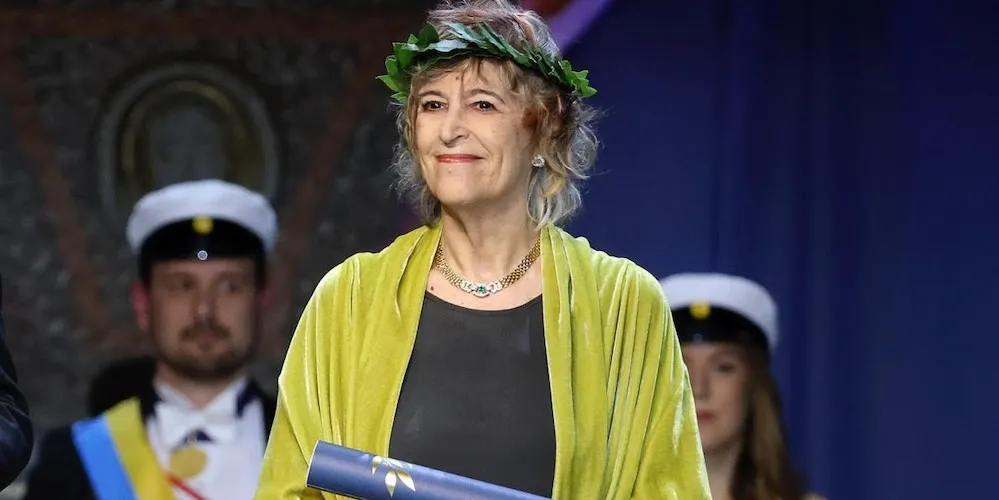
On September 20, 2026 the International Institute of Film Science and Arts (IIFSA) awarded Film and Media Studies Professor Jane M. Gaines a prestigious fellowship.
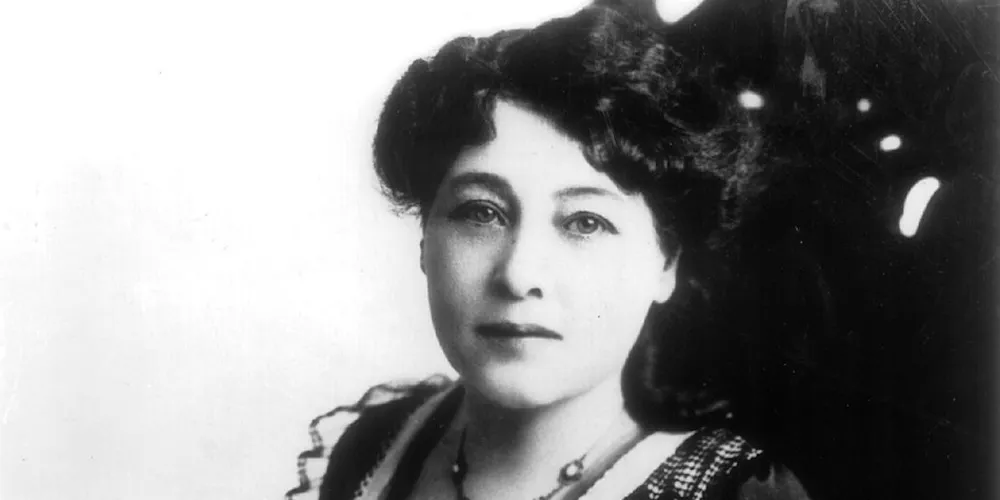
With the Women Film Pioneers Project, Professor Jane Gaines highlights the women who helped shape the early film industry.
Pink Slipped, by Professor Jane M. Gaines was named a Choice Outstanding Academic Title for 2018.