Frank Rose
Coming to Columbia after a long career in journalism, Frank Rose is faculty leader of the executive education seminar Strategic Storytelling, presented by the School of the Arts’ Digital Storytelling Lab in conjunction with Columbia+. He is also awards director at the Digital Storytelling Lab, where in 2016 he established the annual Breakthroughs in Storytelling awards to honor the most innovative approaches to narrative.
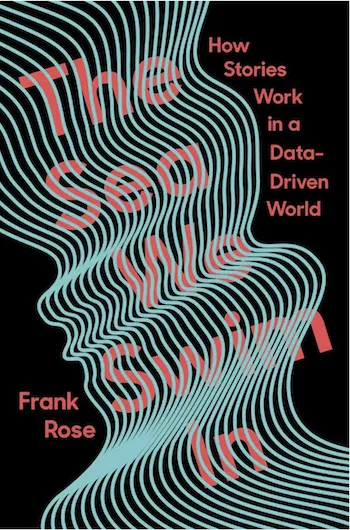
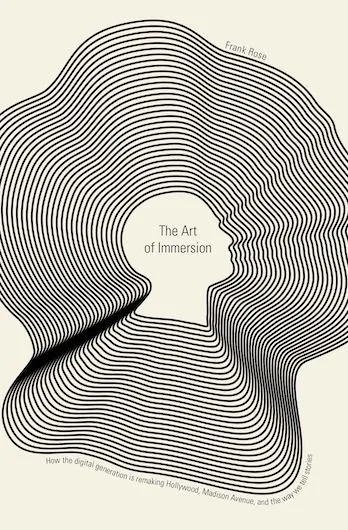
Frank is the author most recently of The Sea We Swim In: How Stories Work in a Data-Driven World, published by W.W. Norton in 2021. His previous book, The Art of Immersion: How the Digital Generation Is Remaking Hollywood, Madison Avenue, and the Way We Tell Stories (Norton, 2011), was called "an essential overview" of the media industry by The International Journal of Advertising. A frequent speaker on narrative thinking and the power of immersive storytelling, Frank has given keynotes at such conferences as ad:tech Sydney, the Film4 Innovation Summit, The Guardian’s Changing Media Summit, and Sheffield Doc/Fest and debated the future of media at Stanford, MIT, Ars Electronica, the Politecnico di Milano, and the Museum of Modern Art.
A native of Virginia, Frank graduated from Washington & Lee University with a B.A. in journalism and moved soon after to New York, where he got his start covering the punk scene at CBGB for The Village Voice. After writing his first book, Real Men: Sex and Style in an Uncertain Age (Doubleday/Dolphin, 1980), he became a contributing editor at Esquire, documenting a number of highly idiosyncratic subcultures—New Wave in New York, generals and bureaucrats in the Pentagon, Christian surfers in southern California, entrepreneurs in Silicon Valley. He also became one of the first national magazine writers to report on digital technology, covering the advent of personal computers and writing Into the Heart of the Mind (Harper & Row, 1984), a national best-seller about A.I. researchers at Berkeley trying to program a computer with common sense.
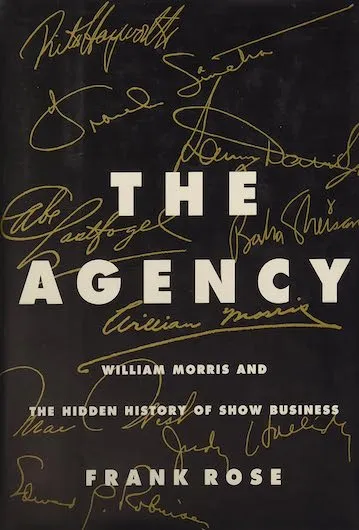
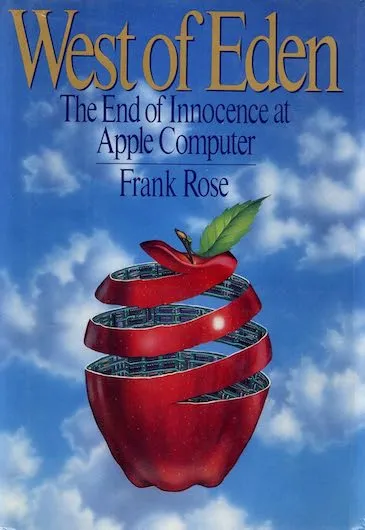
In his next book, West of Eden: The End of Innocence at Apple Computer (Viking, 1989), Frank delved into the cult of Macintosh and the power struggle between Steve Jobs and John Sculley that ended with Jobs being expelled from the company. It too became a national best-seller and was named one of the ten best business books of the year by Businessweek. Then he turned his attention to Hollywood, becoming a contributing writer at the movie magazine Premiere and writing The Agency: William Morris and the Hidden History of Show Business (HarperBusiness, 1995), a multi-generational saga of loyalty and betrayal in show business.
Frank became a contributing writer at Fortune in 1997. Two years later he joined Wired as a contributing editor covering developments at the intersection of media and technology. Over the next decade he covered such stories as Samsung and the rise of the South Korean techno-state, the posthumous career of Philip K. Dick in Hollywood, and the making of James Cameron’s Avatar. When he realized as a result of his reporting that digital technology was changing the way we tell stories—that it was making them nonlinear, participatory and immersive—he left to write The Art of Immersion.
Frank’s essays and reporting have also appeared in The New York Times Book Review and The New York Times Magazine, The Los Angeles Times, The Atlantic, The New Yorker online, New York Magazine, The Milken Institute Review, strategy+business, Travel+Leisure, and Vanity Fair. He currently contributes to The New York Times and The Wall Street Journal in addition to his work at Columbia. In 2022 he became a trustee of the Martha Diamond Trust, dedicated to furthering the legacy of the New York painter Martha Diamond.
Selected Works