Elizabeth Ramírez-Soto
Elizabeth Ramírez-Soto is a Chilean-born, New York-based film and media historian whose areas of research include transnational cinema and television, feminist film histories, documentary studies and archival politics. She is particularly interested in the interconnections of state violence, forced migration, and transnational modes of production, with a focus on Latin America. As a film curator, she conceives her interventions as gestures of epistemic justice and as acts of reparation.
She is the author of (Un)veiling Bodies: A Trajectory of Chilean Post-Dictatorship Documentary (Legenda, 2019), currently being translated into Spanish, and coeditor of Nomadías: El cine de Marilú Mallet, Valeria Sarmiento y Angelina Vázquez (Metales Pesados, 2016). She has also coedited numerous special issues, including “Latin American Feminist Film and Visual Art Collectives” for Jump Cut (2022) and “Guerrilla Archiving: Documents for a Feminist History of Latin American Cinemas,” for Studies in Spanish and Latin American Cinemas (2023). Her articles have appeared or are forthcoming in journals such as Camera Obscura, Historical Journal of Film, Radio and Television, Film Quarterly and Feminist Media Histories, as well as in various edited collections in the United States, Chile, Argentina, Mexico, and Cuba.
Elizabeth is currently writing a book, tentatively titled Unruly Bedfellows: Latin American filmmakers and European public television during the Cold War, that expands transnational media histories through its focus on South American directors’ contributions to European television while interrogating the boundaries between cinema and TV. For this long-standing research project, she has received several fellowships and awards, including a Thyssen Fellowship from the Institute for Advanced Study in the Humanities (KWI) in Germany, a François Chevalier Fellowship from the Madrid Institute for Advanced Study and Casa de Velázquez in Spain, and a Summer Stipend from the National Endowment for the Humanities in the US.
Recently, she has been invited to become a Mercator Fellow in the DFG-funded project “Working Relations Between Film, Television and the World: Stories of Das kleine Fernsehspiel” at Johannes Gutenberg-Universität Mainz, in Germany (2026–2028), and to join the advisory board of the feminist journal Camera Obscura. Earlier, she cofounded the feminist research network Red de investigación del Audiovisual hecho por Mujeres en América Latina, RAMA.
Before joining Columbia University as Associate Professor in Film and Media Studies, she worked as Assistant Professor in the Department of Communication and Media Studies at Fordham University and the School of Cinema at San Francisco State University.
Elizabeth received her Ph.D. in Film and Television Studies from the University of Warwick, in England. She also holds an MA in Media, Communication and Cultural Studies from the Institute of Education, University of London and Université Stendhal-Grenoble 3, in France (CoMundus). Previously, she studied journalism in Santiago de Chile at the Universidad Diego Portales.
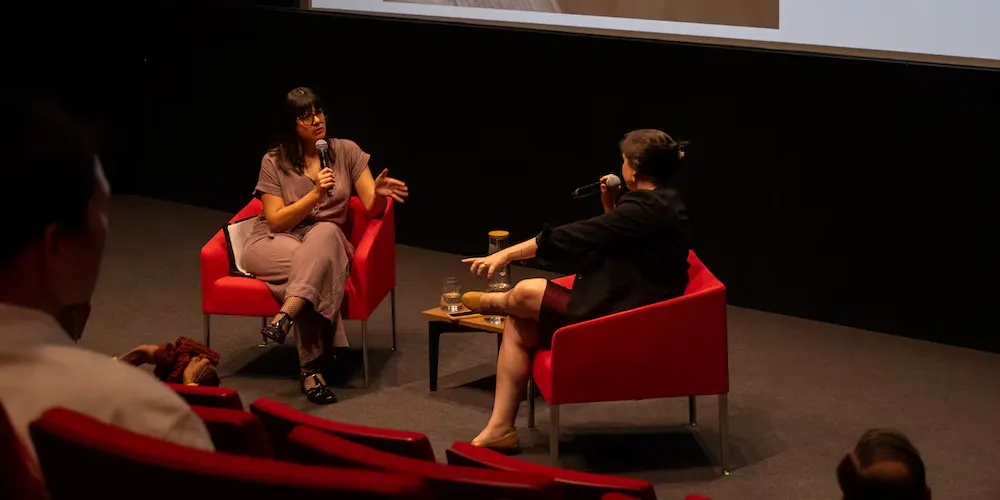
The 1959 film Araya documents the daily toil of villagers living on the titular Venezuelan peninsula. Read more from the Columbia Spectator.
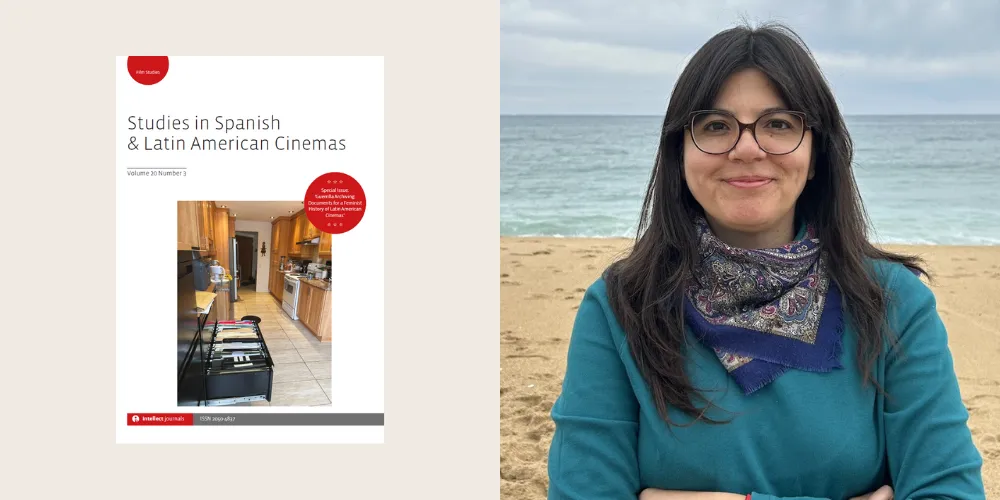
Associate Professor of Film and Media Studies Elizabeth Ramírez-Soto recently helped co-edit and co-publish a special edition of the Studies in Spanish & Latin American Cinemas journal: Guerrilla Archiving: Documents for a Feminist History of Latin American Cinemas.
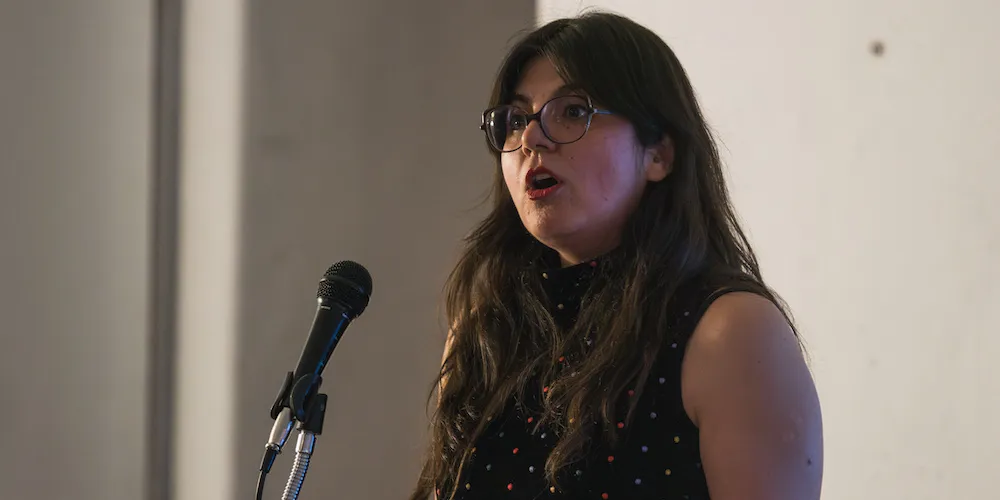
This Is Who We Are is a series featuring Columbia School of the Arts' professors, covering careers, pedagogy, and art-making. Here, we talk with Associate Professor Elizabeth Ramírez-Soto about the pleasures of the archive, what feminist film history can teach us about the present, and the value of spending time researching and understanding non-canonical works.